
Boarding your dog for the first time: what the kennel needs
The paperwork, the food and the medication a kennel needs from you, plus the part most owners skip: who they may call, and decide with, when you do not pick up.

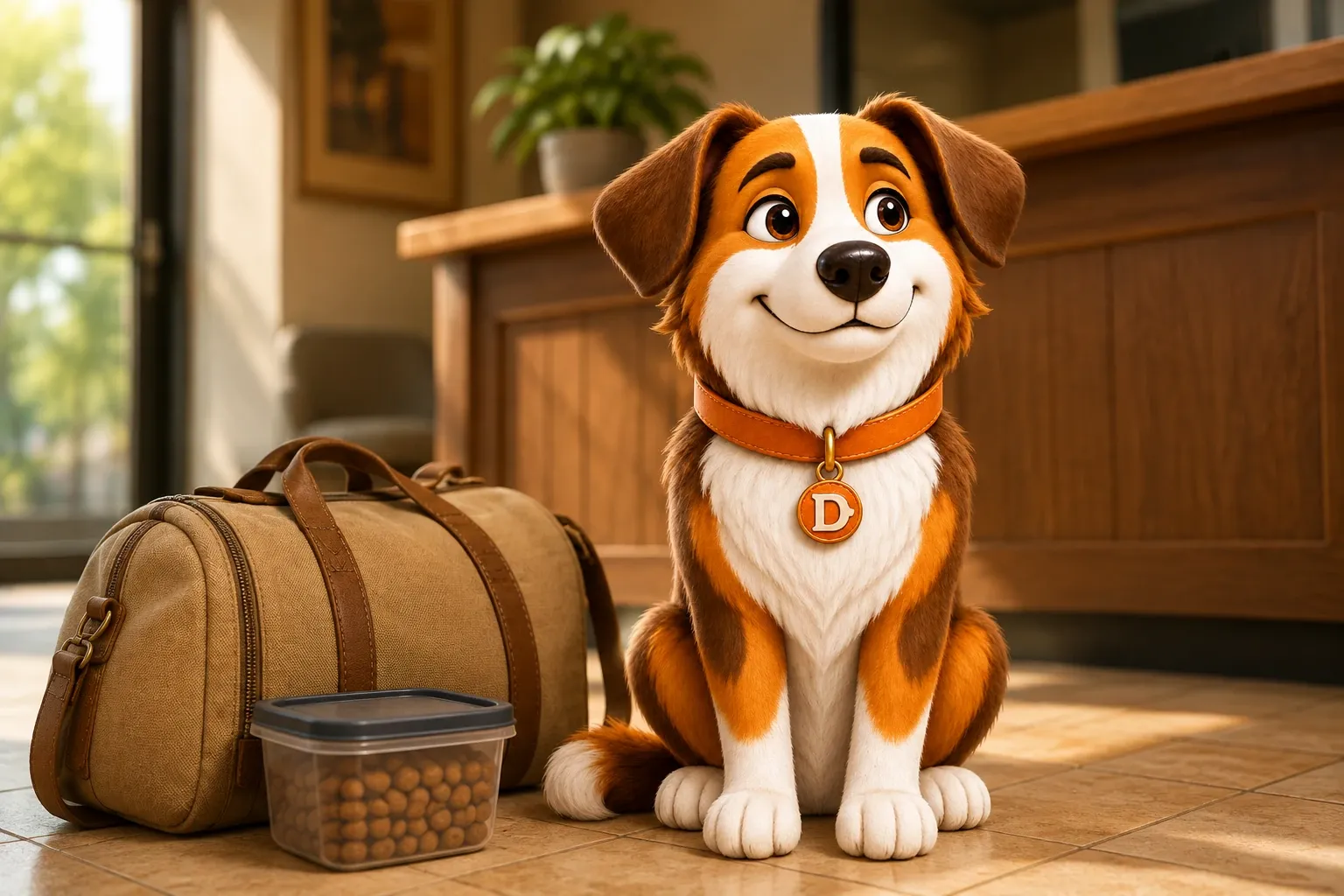
Most of the anxiety about a first boarding stay is about the dog. Most of the problems are about paperwork.
A kennel needs four things from you: proof of the vaccinations they require, your dog’s food and medication in a form their staff can hand out without guessing, written instructions that survive a shift change, and a phone number that a human will answer while you are away. Get those right and the stay is mostly out of your hands, which is the point of paying for it.
What does the kennel actually need from you?
Their intake form, filled in properly, plus the vaccination proof they specify. Ask for both on the day you book. A missing vaccination record is the problem least likely to be solvable at the door, and it takes a clinic visit to fix. What each facility requires varies, so treat their list as the authority and get a copy of the record from your clinic in whatever format they accept. If you are hunting for paperwork the night before, the fix is upstream, in how the records are kept.
The intake form is worth slowing down on. It is not a formality; it is the only version of your dog the staff will have, and it is written by you under time pressure in a car park. Fill it in at home.
Two answers on it matter more than the rest. Anything that changes how they handle him, such as resource guarding around food, a dislike of being lifted, or a recall that fails outdoors. And anything that changes what they watch for, such as a history of seizures or a sensitive stomach.
How should you send food and medication?
Pre-portioned, labelled, and counted, so nobody has to interpret anything. Send the food your dog already eats, since a diet change on top of a new building and new noises is a variable you can simply remove. Ask how they want it: some facilities want each meal bagged separately, others want the container and a scoop.
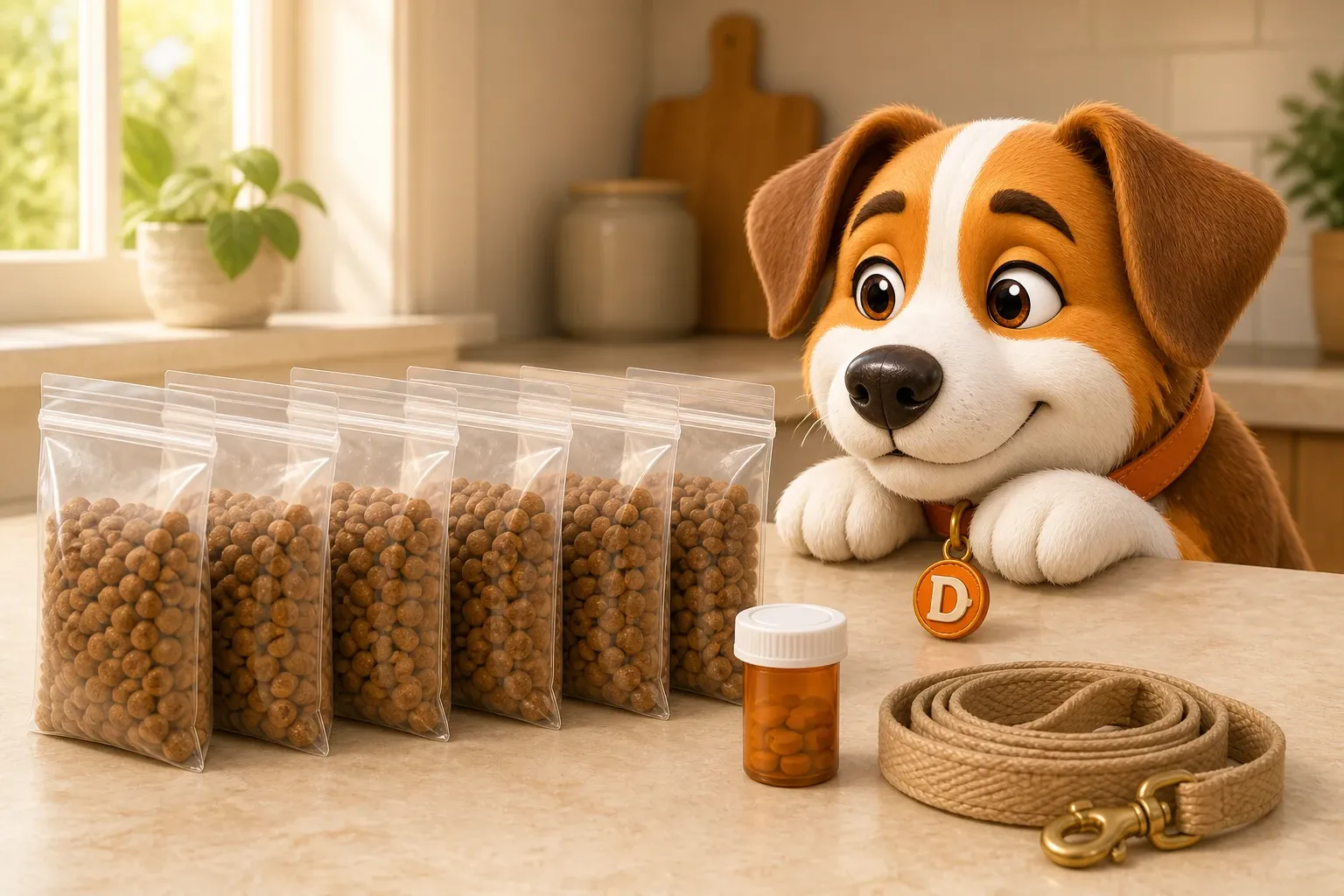
Medication is where written instructions earn their keep. Send it in the original labelled packaging, with the dose and the timing written the way you would say it out loud, and count what you send. If you hand over fourteen tablets for a seven-day stay at two a day, both of you can check the maths at pickup, and a missed dose shows up in the count.
Say what happens if a dose is refused. A dog who takes a tablet in cheese at home may spit it out for a stranger, and staff who have been told “wrap it in something and try again in ten minutes” will not have to phone you about it.
Who do they call if you do not answer?
Somebody who is not you, and this is the question first-time owners skip. You will be on a plane, in a meeting, or somewhere with no signal, and that is precisely when a decision needs making. Give the facility a named local contact who can be reached and who knows they have been named.
The principle is the same one AAHA gives for microchip records, where they recommend listing an alternate contact such as a trusted family member alongside your vet’s details: multiple routes to a real person are what make the record work when the first route fails.
Then settle the two questions that follow from it, in writing, before you leave:
- Which vet. Your usual clinic if it is close enough, and the facility’s own arrangement if it is not. Give them the clinic name, the number, and permission to request your dog’s history.
- What the alternate contact may authorise, and up to what amount. A person who has been told “you can approve treatment up to this figure, and here is my card” can act. A person who has only been told “they might call you” will spend the afternoon trying to reach you instead.
While you are handling identification, check the microchip registry too. AAHA suggests confirming those details are current before travelling with a pet, and a dog going to a kennel while you leave the country is the same exposure with the roles reversed.
What should you pack, and what will they turn away?
Less than you think, and nothing you would mind losing. Facilities set their own rules about what comes in, so send the first column without asking and clear the second column before you pack it.
| Send it | Ask first |
|---|---|
| Their own food, portioned and labelled | Bedding too large to wash or store |
| Medication in original packaging | Rawhide and hard chews meant to be left with the dog |
| A worn t-shirt or small blanket that smells of home | Toys that come apart into swallowable pieces |
| A well-fitted collar with current ID | Retractable leads, and any training collar |
Label everything with your dog’s name, including the bowl if you send one. Then photograph the pile before you hand it over, which takes ten seconds and settles any question at pickup about what came back.
Is your dog ready for a first stay?
Ask it about your specific dog. A dog who is comfortable being handled by strangers, who eats in an unfamiliar place, and who has spent time away from you before will settle faster than one for whom all three are new at once.
Where a facility offers a trial night, take it. It converts the real stay into a return visit, and it gives the staff a read on your dog while the stakes are low. It also gives you something concrete to judge, which a tour cannot: how he was when you collected him. A few daytime visits do the same job; a dog’s first day at daycare covers the assessment and the vaccination timing a centre will ask for.
Boarding is one of two shapes, and they break differently. A kennel gives you staff on site and a fixed routine your dog adapts to. A sitter keeps your dog’s routine and his own house, and usually leaves him alone between visits, which is a different set of hours to think about and a different handover to prepare. The two also differ in what they are obliged to write down about your dog, which is worth reading before you choose: what a sitter, a kennel, a home boarder and a daycare each have to record. Once you have chosen premises, checking the licence takes one call. If the stay falls over Christmas, book earlier and leave the holiday emergency details.
Where Dana fits
Everything a kennel asks for already exists somewhere in your household; the work is finding it under pressure. Dana keeps vaccination dates, medication and doses and your vet’s details on one shared record, so any caregiver doing the drop-off can answer the intake form without ringing whoever usually handles it. It is the same record the rest of shared care runs on, which is why the answers are already there the week you need them.
Questions people ask
How far ahead should I book a first boarding stay?
Far enough to fix a vaccination problem, which is the thing most likely to stop the booking. Confirm what proof the facility wants as soon as you book, so there is time to call the clinic if something is missing.
Should I do a trial night before a long trip?
If the facility offers one, yes. A single overnight tells you how your dog settles and tells the staff how he behaves, and it makes the real stay his second visit.
Can I send my own food?
Almost always, and you generally should. Sending the food your dog already eats removes a diet change from a week that already has a lot of change in it. Ask how they want it portioned and labelled.
Is boarding or a pet sitter better?
They fail in different places. Boarding gives you staff on site and a fixed routine your dog has to adapt to; a sitter keeps your dog's own routine but usually leaves them alone between visits. Choose on which of those two your dog handles worse.
Should I check my dog's microchip before boarding?
Yes. AAHA recommends getting in the habit of confirming your microchip details are current before travelling with your pet, and the same logic applies when your dog travels to a kennel without you.