
Cat boarding checklist: check the space, then pack
Before boarding your cat, check escape prevention, separate housing, medication limits and records. Then pack familiar supplies and agree on the pickup plan.

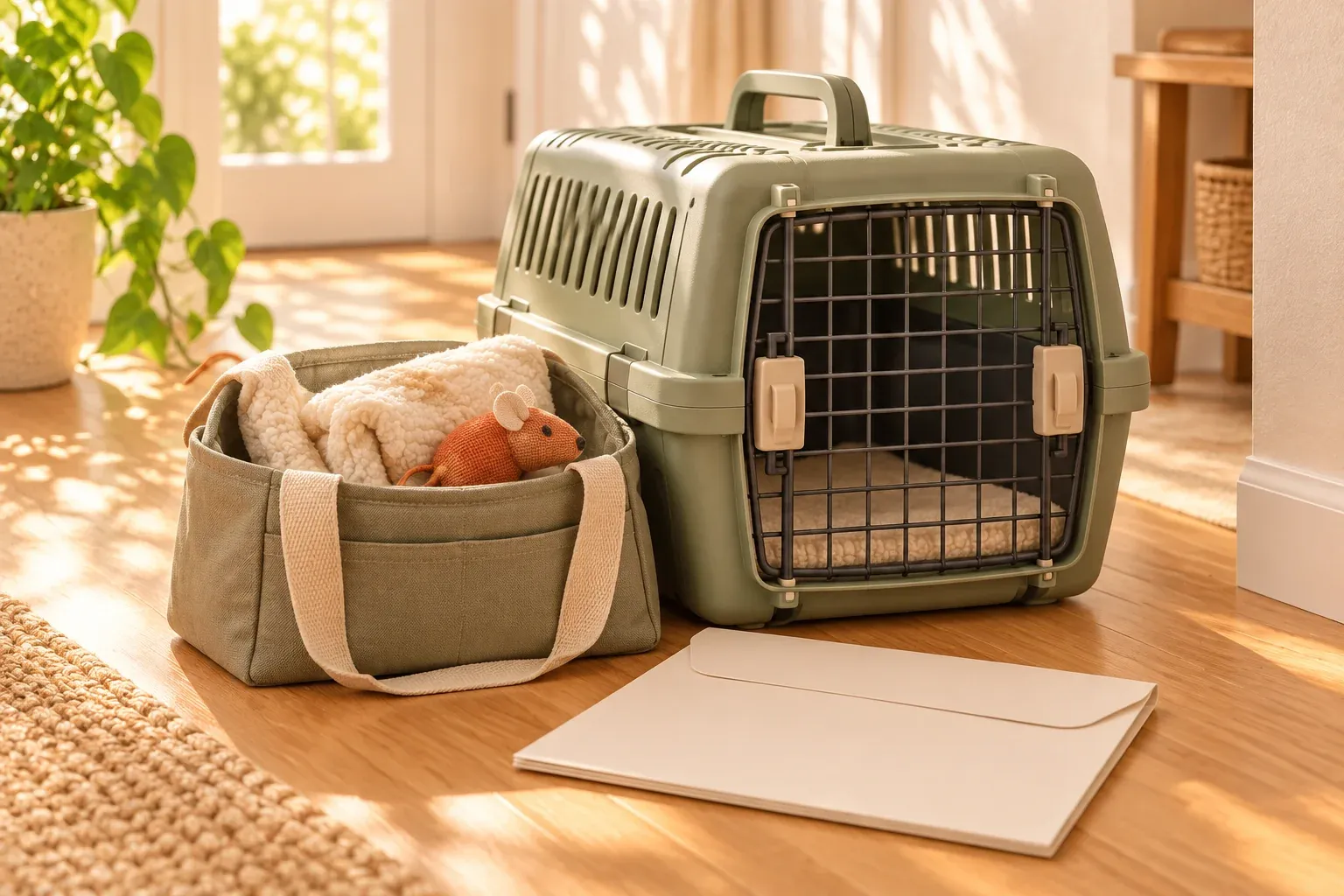
Before you book, check escape prevention, housing, admission records and whether the facility can follow your cat’s care instructions. Agree on food, familiar items, how staff will contact you and what information you’ll get at pickup.
Is boarding the right arrangement for this trip?
Compare the boarding space with the home care you can arrange. Ask to see the housing before choosing it for your cat.
Cats Protection’s holiday guidance says familiar home care is generally the least unsettling option and advises choosing a cattery carefully when boarding is the plan. Its inspection questions include escape prevention, separate housing and the facility’s willingness to administer needed medication.
If you are still choosing a home sitter, our leaving-a-cat-alone guide covers home care. For a Christmas stay, book the cattery or sitter early and check which clinics are open over the holiday.
What should you look for during a facility visit?
Look at how a cat gets from the entrance into secure housing, and how the housing works when staff open doors. Cats Protection specifically recommends checking for double doors or a safety corridor and whether cats can have direct contact with unrelated cats.
Ask where your cat would stay, rather than judging only the reception area. Ask how pens are cleaned; check food and water bowls, resting space and separation between pens. Ask about noise and whether your cat can see other animals.
Licensing rules vary by jurisdiction. Cats Protection’s cattery advice comes from the UK; use the applicable local authority for a facility’s legal requirements. Our boarding-licence guide explains why a review score and a licence check answer different questions.
Which admission records and care needs should be confirmed first?
Ask for the facility’s current written requirements and send the required records before arrival. Vaccine, timing and paperwork rules vary by facility.
For example, Petropolis’s cat boarding requirements name FVRCP and rabies vaccination for its own facility. It also describes a medication service with limits, including an exception for insulin. Ask your chosen facility whether it can provide your cat’s prescribed care. Those rules aren’t vaccine advice or an endorsement.
Ask your vet about your cat’s care, then check whether the facility can follow that plan. If it can’t, make other arrangements before travel. Don’t leave the question to the employee who happens to be at reception on departure morning.
| Before booking | Before drop-off | At pickup |
|---|---|---|
| Inspect housing and entry security | Use a secure carrier for the transfer | Collect your carrier and belongings |
| Confirm admission documents | Check that the facility received them | Ask about missing or updated records |
| Confirm accepted care instructions | Hand over the agreed written plan | Ask what was actually done |
| Agree on food and familiar items | Label accepted supplies for this cat | Check what remains and was returned |
| Name who can decide and a backup | Confirm how staff can reach you | Review any incidents or concerns |

What should go in the boarding bag?
Pack what the facility has agreed to accept, with clear identification for your cat. Familiar food, a permitted blanket or toy and the required records are more useful than a large bag of items staff cannot use.
Ask how much food to bring and whether staff need it portioned or in its original packaging. If medication is involved, follow the veterinarian’s instructions and the facility’s handover rules. Don’t use this packing list to change a dose or feeding plan.
Write down what belongs in the bag and what you expect back. A simple inventory helps when another household member collects the cat. Send only the information relevant to the stay; the care-provider records guide covers sharing documents without exposing unrelated personal details.
What happens if staff cannot reach you?
Agree on the contact order, backup person and emergency procedure before the stay. Ask which decisions the facility may make under its agreement and which require your authorization. Read those terms rather than relying on a quick conversation at drop-off.
Leave a working number, your vet’s details and the agreed emergency contact plan. If you’ll be without cell reception or in another time zone, tell the facility when and how it should use the backup contact.
Ask how staff send routine updates. A photo can be reassuring, but it doesn’t establish that every care task was completed. If you need details, ask staff directly.
What should you ask at pickup?
Ask what your cat ate, what care staff gave, whether instructions were missed or changed, and what your vet should know. Ask for details rather than accepting “everything was fine” as the whole record.
Check returned supplies and written notes while you can still ask the person responsible. Pass relevant concerns to your veterinarian, especially when the facility’s account differs from the agreed care plan. Tell your vet what you observed without diagnosing it yourself.
Update the household’s shared care plan with any changes. Give the next caregiver the current instructions.
Where Dana fits
Dana’s shared care can keep preparation tasks and caregiver responsibilities together, while Records Vault holds documents you choose to share. Ask the facility how it wants the handover. Dana does not monitor a boarding stay or verify that staff followed the plan.
Questions people ask
What should I check before booking cat boarding?
Inspect the housing and escape-prevention arrangements, ask whether unrelated cats are separated, confirm admission records and discuss any medication or special-care needs before paying.
Can every cat boarding facility give medication?
No. Ask the facility to confirm the particular care your cat requires and whether its staff can provide it. A facility that gives medication may not accept every treatment.
Should I bring my cat's usual food and bedding?
Ask the facility which familiar items and food it accepts, how much it needs and how items should be labeled. Follow the agreed feeding and veterinary instructions rather than making a last-minute change for the stay.