
How to switch vets and transfer your pet's records
The new clinic usually asks the old one for the history. In Ontario an unpaid bill can't hold it back, and a previous owner must consent to release their part.

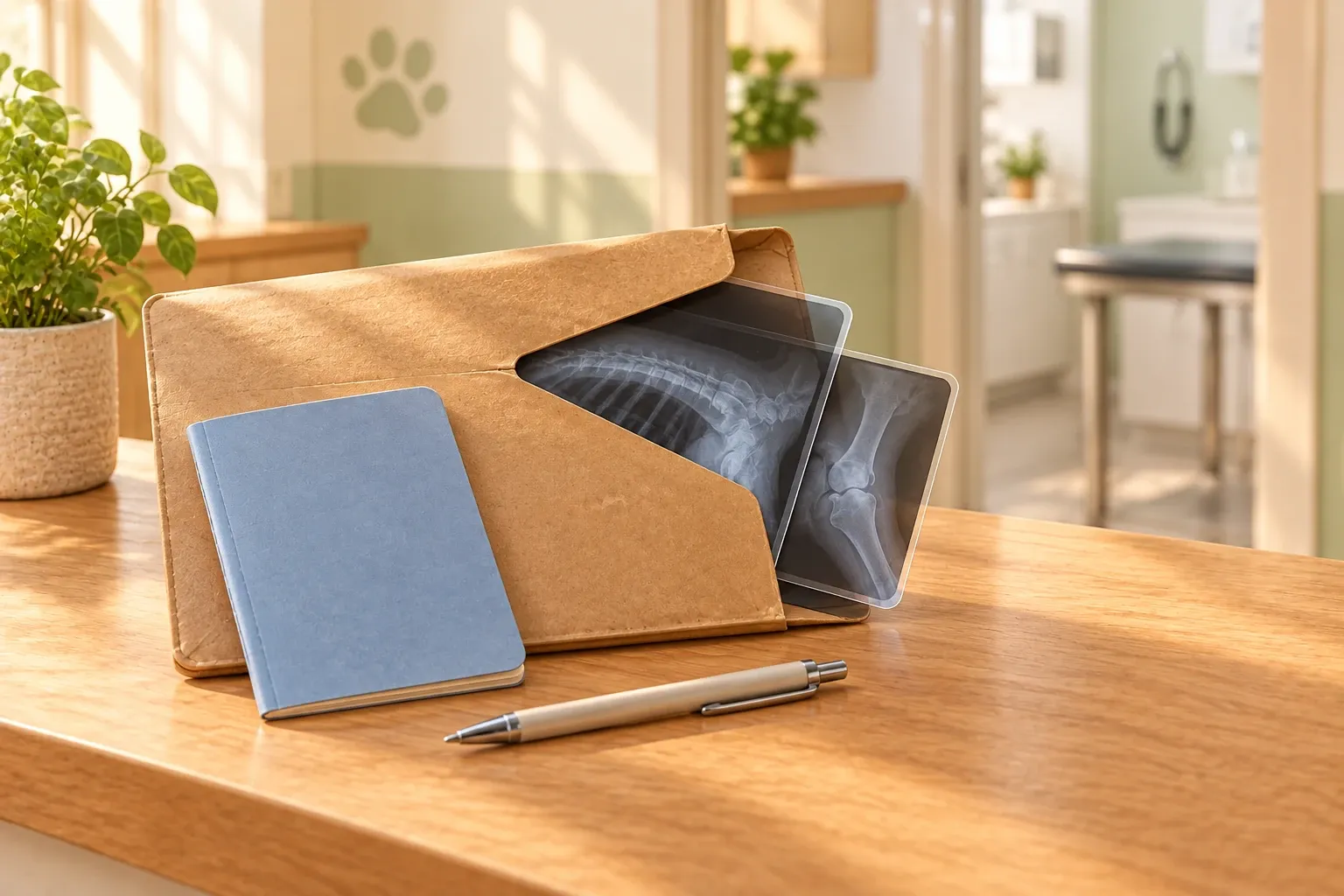
You’ve booked the first appointment at the new clinic. The old one still has the bloodwork, the X-rays and the vaccine dates nobody can reconstruct from memory.
You’re entitled to a copy of those records, and the new clinic normally requests the transfer itself. Ontario’s guidance also expects a complete transfer within two business days and bars a practice from holding the file back over an unpaid bill; elsewhere the details differ.
Who owns your pet’s medical record?
That depends on where you live. In Ontario the clinic keeps the original record and the information in it is yours.
The College of Veterinarians of Ontario puts it this way in its guide to the medical records standard: the original physical or electronic record must be retained by the veterinary facility, while “the information contained in the record belongs to the client and the client has the right to access the content of the record.” The clinic has to keep that original for at least five years after the last entry, and how long vets keep records compares that with other places.
In the US the American Veterinary Medical Association treats the record as the practice’s property, with a duty to give you copies or summaries when you ask. Either way, what you request is a copy, not the file.
Does the new clinic ask, or do you?
Usually the new clinic asks.
CVO’s guide says a veterinarian treating an animal that has previously been seen elsewhere is “required to notify the previous veterinarian and obtain relevant historical (i.e. medical) information as soon as practicable,” after which the previous veterinarian must provide what is relevant to that request. In the UK, the Royal College of Veterinary Surgeons’ guidance on communication between colleagues says a veterinary surgeon “should not knowingly take over a colleague’s case without informing the colleague in question and obtaining a clinical history.”
When you book, give the new clinic your old practice’s name and ask them to request the records. Ask for your own copy at the same time.
Do you have to tell your old vet you’re leaving?
No. You don’t owe the practice a reason, and if the new clinic requests the history, that tells them anyway.
Check what’s still active on your account instead. Ask the old practice to stop its reminders, and cancel any repeat deliveries of food or medication you set up through it. A wellness plan or membership has its own cancellation terms; check them before the next payment date, and ask what happens to any prepaid visits you haven’t used.
Can they hold the records over an unpaid bill?
Not in Ontario. If a practice holds the file back anyway, see where to complain.
Ontario’s standard says a veterinarian “must not obstruct the efficient and timely release of information due to any outstanding fees that a client may owe,” and that explicitly covers a client’s refusal to pay for the copy. A practice may charge a reasonable fee for materials, staff time and postage, and it should tell you about that fee, but payment is not a precondition for getting the copy promptly.
The guide also says a request doesn’t have to be in writing: you can ask by phone, email, fax, post or in person. A request to transfer a complete copy “should be completed within two (2) business days,” and in an urgent case the relevant information can be given verbally first, with the documents to follow.
The UK’s RCVS Code says veterinary surgeons and nurses “must provide copies of any relevant clinical records at the request of a client.” In the US, the AVMA’s ethics principles oblige a vet to provide copies or summaries of the record when you ask (what that covers), and fees and timing vary by state. Check your own regulator before relying on Ontario’s numbers.
Which records should you ask for?
Ask for the complete file, not a summary. A clinic may send a summary or part of the file rather than all of it. That may be enough for the new vet and still leave out records you’ll want later.
| Ask for this | Why ask for it |
|---|---|
| The images, not only the report | CVO requires radiographs where they’re relevant to the request, and a digital one can be sent as a copy of the image. A radiologist’s paragraph is not the picture a second clinic can re-read |
| Lab results with their dates | Dated results let the new vet see the trend |
| The vaccination history | What boarding, travel, groomers and landlords ask to see |
| The current medication list, with doses | Bring it to the first appointment rather than recalling doses from memory |
| Anything from before you owned the pet | In Ontario it needs the earlier owner’s consent, so ask whether any was left out |
If your pet had an earlier owner, CVO says the practice must get that owner’s consent before releasing the part of the record created while they were the client. With a rescue or a rehomed pet, part of the history can be missing without any notice, so ask the old clinic directly whether anything from a previous owner was held back. Getting a copy of your pet’s medical records covers the request itself, and the guide to pet health records covers the rest of the paperwork.
When is the worst moment to switch?
In the middle of a workup, a course of treatment or a taper. A partial history matters most then, because the new vet sees earlier decisions without the reasoning behind them. If a refill is due while you’re between practices, ask the old one for a written prescription to fill elsewhere, which an Ontario vet has to give you on request. If what you want mid-workup is another view rather than a new practice, consider a second opinion first.
If you’re moving house, moving house with a dog covers the order of steps. If you can choose, switch just after a routine visit, when the file is current and nothing is pending.
What to check before the first appointment
Check your copy before the visit: that the vaccine dates are current, that any imaging you remember is attached, and that the medication list matches what’s in your cupboard. If you spot a gap at home, email the clinic; finding it during the appointment can mean repeating a test.
The vet visit checklist covers what else to bring.
Where Dana fits
Dana’s health record keeps vaccine dates, the weight trend, the microchip number, the medication schedule and your vet’s contact details together, so you have them before the transfer. With Dana Pro’s Records Vault you can share documents through an expiring link protected by a code, instead of emailing files to the new clinic. Each entry shows who added it and when.
Questions people ask
Who owns my pet's medical records?
In Ontario, the practice keeps the original and the information in it is yours. The College of Veterinarians of Ontario states that the original record must be retained by the facility, while the information in the record belongs to the client, who has the right to access its content. What you ask for is a copy.
Do I have to request the records myself when I switch vets?
Usually not. The new clinic is expected to contact the old one. CVO requires a veterinarian treating an animal seen elsewhere to notify the previous veterinarian and obtain the relevant history as soon as practicable. The RCVS says a vet should not knowingly take over a colleague's case without informing them and obtaining a clinical history. Ask for your own copy too.
Can a vet refuse to release records because I owe them money?
In Ontario, no. CVO says a veterinarian must not obstruct the efficient and timely release of information because of outstanding fees, and that this includes a refusal to pay for the copy itself. A practice may charge a reasonable copying fee, but you don't have to pay it before you get the copy.
How long should a records transfer take?
CVO's guide says a request to transfer a complete copy should be completed within two business days, and that in urgent cases the relevant information can be given verbally with the copy to follow. Other places set their own deadlines, so check your regulator before relying on this one.
Why is part of my pet's history missing?
If your pet had an earlier owner, the information from that period belongs to that person, and CVO says the veterinarian must get the previous owner's consent before releasing them. With a rescue or a rehomed pet, the transferred file may not show that anything was left out.