
Leaving a dog home alone while you work: who covers the day
The RSPCA says never leave a dog alone long enough to become distressed. Cover the midday gap with a named person, a written routine and a visit log.


Nobody is home between 8 AM and 6 PM on Tuesdays. You know this. The dog knows this. What nobody in the house can say out loud is who is handling 1 PM this week.
Leaving a dog home alone while you work is a coverage problem before it is a welfare one. Name the person who fills the midday gap, write the routine so anyone can run it, and make the visit leave a record. Once the day has a named owner and a log, the guilt stops being an argument and becomes a schedule.
How long can a dog be left home alone?
There is no single number, and the honest sources do not give one. The RSPCA’s guidance on company for dogs puts it as a limit rather than a duration: dogs are sociable animals, they need enough time with human or animal company that they do not get lonely or bored, and you should never leave a dog alone long enough for them to become distressed.
That threshold is different for a nine-week puppy, a four-year-old lurcher who sleeps through the afternoon, and a fourteen-year-old who needs to get outside more often than she used to. The same organisation lists what distress tends to look like from the outside: destructive behaviour, toileting indoors, and barking your neighbours hear before you do.
That makes the number a poor thing to plan around. Plan around the hours themselves: what he does with them, and who is there for the part he cannot do alone.
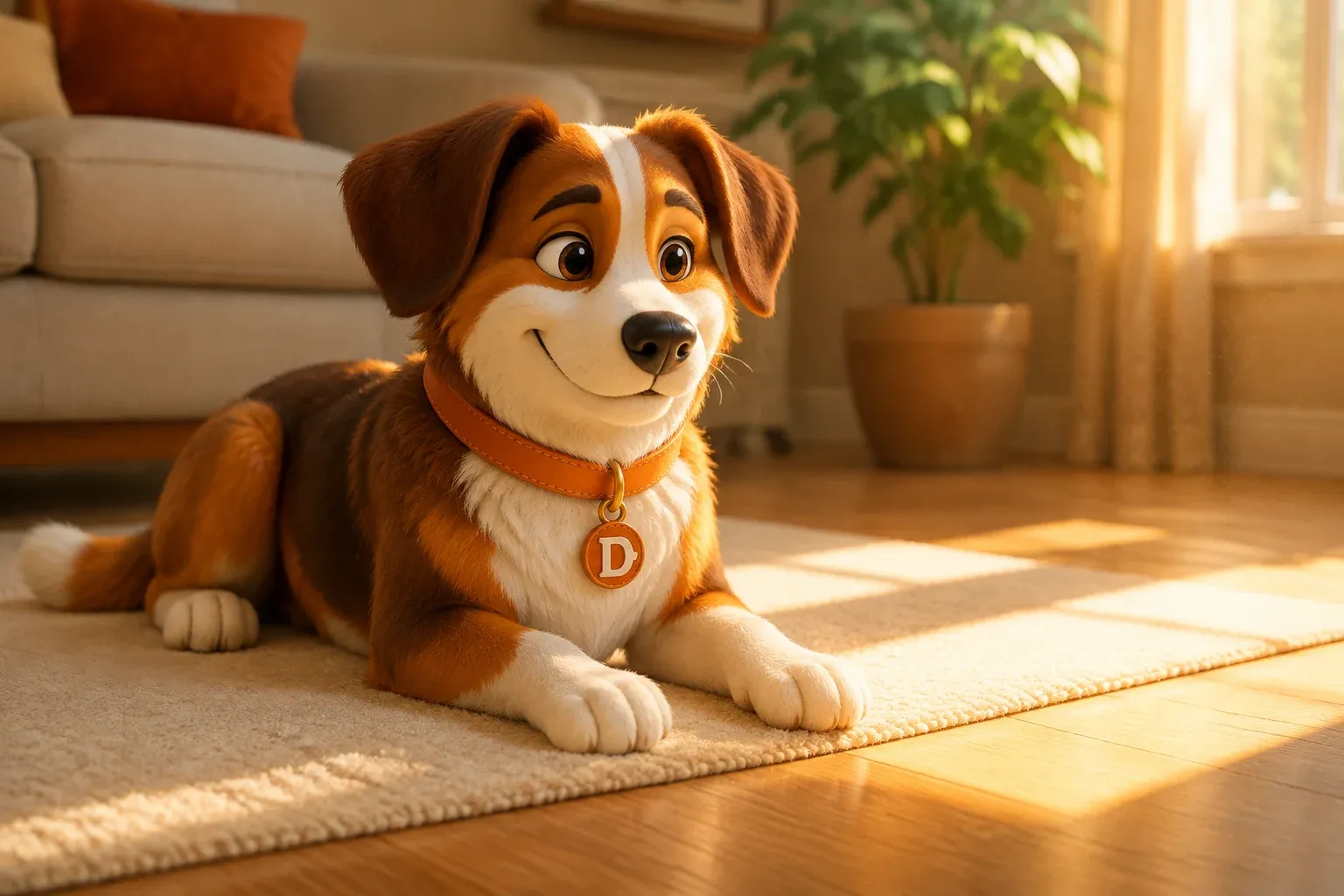
Who covers the middle of the day?
Most households have more options than they think, and they fail at picking one rather than at finding one. Each of these works. Each also costs something in coordination, which is the part that gets skipped.
| Cover | Works when | What it costs to run |
|---|---|---|
| Someone in the house comes home | One person’s commute or shift allows it | Nothing, until that person’s schedule changes |
| A neighbour or family member | They are already nearby and willing | A key, a routine in writing, and a way to say it is done |
| A dog walker | Most weekdays, same time, paid | Vetting, a spare key, and confirmation of each visit |
| Daycare, some days | Your dog likes other dogs and travels well | Booking, drop-off, and vaccination records on file |
| A shorter day, some days | Your work allows it | The one nobody writes down, so nobody plans on it |
Pick one per weekday and write it into the schedule by name. “We’ll figure out Wednesdays” is how Wednesdays become the day nobody went. If daycare is one of the slots, the first day comes with its own requirements and an assessment; a dog’s first day at daycare lists them.
Mixing is normal. Walker on Tuesday and Thursday, neighbour on Monday, one of you home early on Friday. What matters is that each slot belongs to a person rather than to the household in general, because a task owned by everyone is owned by whoever feels guiltiest that morning. That dynamic is its own problem, and we wrote about it in when one person does all the pet care.
How do you know the midday visit actually happened?
You know because it was logged. A walker’s “all good today!” is a kindness, and it carries none of the four things you wanted: the time, the length of the visit, whether he ate, and whether the second dose went in. A recorded walk carries the first two on its own.
Replace it with three facts recorded at the time: who was here, when, and what they did. That is a small ask of a walker and a smaller one of a neighbour, and it changes what happens next. When you get home at 6:40 and the water bowl is full, you do not have to reconstruct the day from evidence. When the vet asks on Thursday whether he has been eating normally, the answer is in a list rather than in three people’s memories.
It also fixes the quieter failure. In a house where two people share the dog, an uncertain midday means the evening walk is either doubled or skipped, because each person is working from a guess about the other. The family pet care schedule piece covers the general shape of this; the workday version is the same rule aimed at the one slot nobody witnesses.
How do you choose a dog walker or midday sitter?
Interview for the boring things, because the boring things are what break. Humane World for Animals suggests asking how long they have been working, what their experience is with your species, whether they are bonded and insured, and whether they are comfortable giving medication. They also recommend posing an emergency scenario and listening to the answer.
The question worth stealing from that list is the backup plan: what happens if something stops them coming to your house. A walker with a real answer has thought about the day your dog is alone from eight until six. A walker without one has quietly made that your problem.
Then do the meet-and-greet before you book, and consider a trial walk. Ask for references and, if you want them, a background check and copies of their bonding and licence. In Toronto, a walker controlling more than three dogs needs a City permit, and what to check on a Toronto dog walker permit covers the name, group size and route. When they start, they need the same handover any sitter needs, which is the subject of our pet sitter handoff checklist: the routine, today’s state, and a way to confirm care happened.
What breaks the arrangement, and when?
It breaks on the ordinary weeks. Someone gets a 1 PM meeting they cannot move. The walker takes a week off. A kid’s schedule shifts and the person who used to be home at four is not. None of these is a crisis, and all of them are silent, which is why the dog is the one who finds out.
Two habits absorb most of it. Review the week on Sunday and say the gaps out loud, including who is travelling. And let the record raise the alarm instead of a person: if the midday entry is still missing at 2 PM, somebody can act on it while it still matters. The full system for a household running this together is in our guide to sharing pet care.
Where Dana fits
In Dana, the workday is a set of tasks with names on them. A walker or a neighbour can join as a limited caregiver, seeing only the tasks you assign them or leave open to anyone, with access that ends on the date you set. DogLog invites walkers too; what separates the two apps is a reminder that stands down for everyone, plus roles and that end date. Every walk, meal and dose they log carries who did it and when, and a reminder for a task stands down for the whole household the moment anyone handles it, so nobody comes home and does it twice.
Questions people ask
Is it cruel to leave a dog alone while you work?
Not by itself. The RSPCA's position is that dogs are sociable animals who need company, and that you should never leave a dog alone long enough to become distressed. It is a question about coverage: what fills the hours you are out.
How do I know the dog walker came?
Ask for the visit to be logged rather than described. A time-stamped entry that says who was here and what they did answers the question; a message saying all good at the end of the day does not.
What should I ask a dog walker before hiring them?
Humane World for Animals suggests asking how long they have been working, their experience with your species, whether they are bonded and insured, whether they will give medication, and what their backup plan is if they cannot come.
Can a puppy be left alone for a full workday?
A puppy needs far more frequent breaks than an adult dog, so a full workday needs someone in the middle of it. Our new puppy schedule covers how households split those first weeks.