
Found a dog with a rabies tag? How to trace the owner
A rabies tag may lead to the vet that gave the shot, a licence tag to the city. Call the office on the tag with its number and year, and get the dog scanned.
 Kourosh Ebrahimzadeh6 min read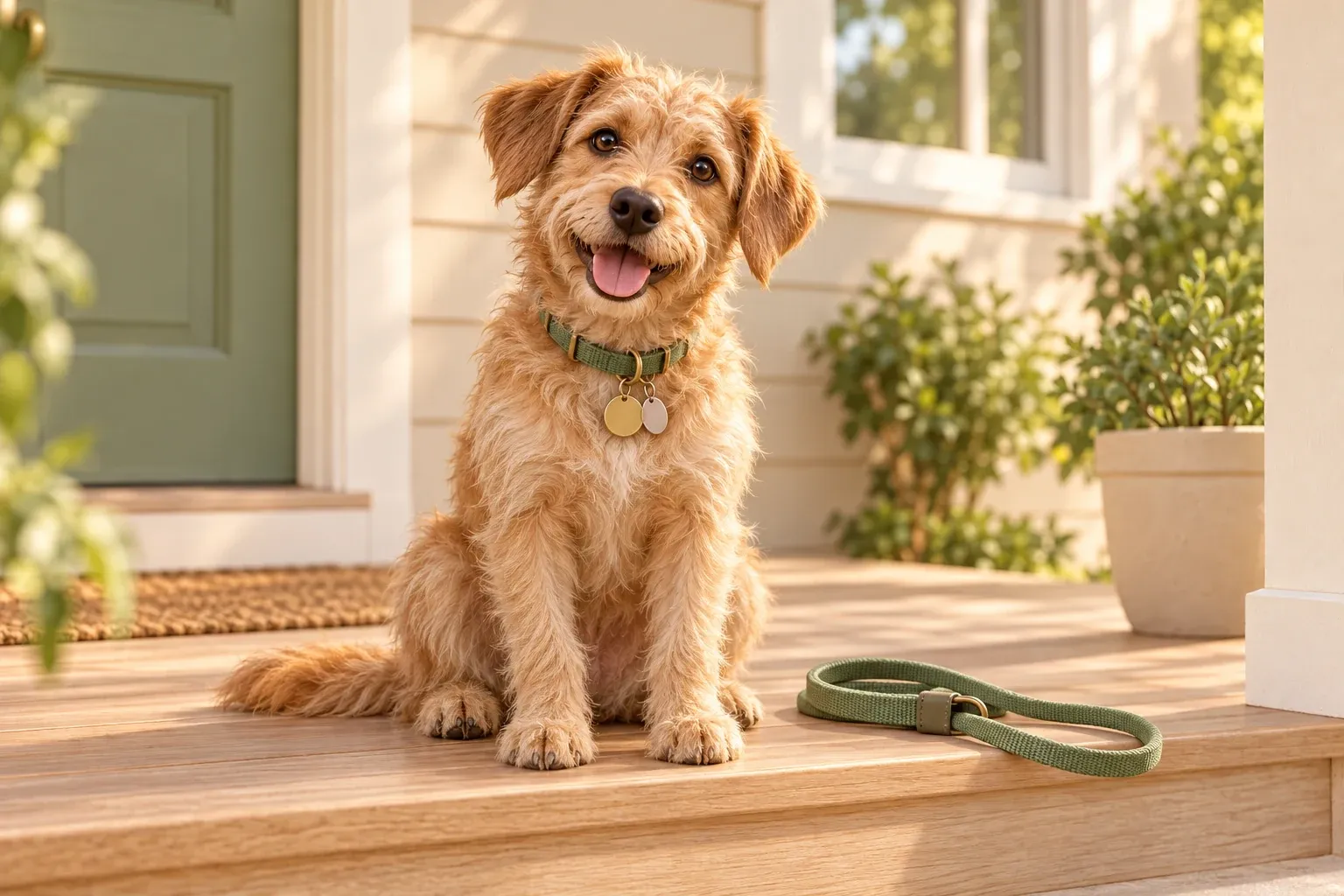
The dog on your porch has no name tag, but one of the two metal discs on its collar carries a clinic name and a number. The clinic may find the owner from that number.
A rabies tag that names a clinic points to that clinic’s vaccination record; a licence tag points to the city that issued it. Either office may be able to contact the owner: call the one named on the tag, give the number and the year, and let it make the contact. If the dog has no tag, a vet or shelter can scan it for a microchip in a minute.
What do the numbers on a dog’s tags mean?
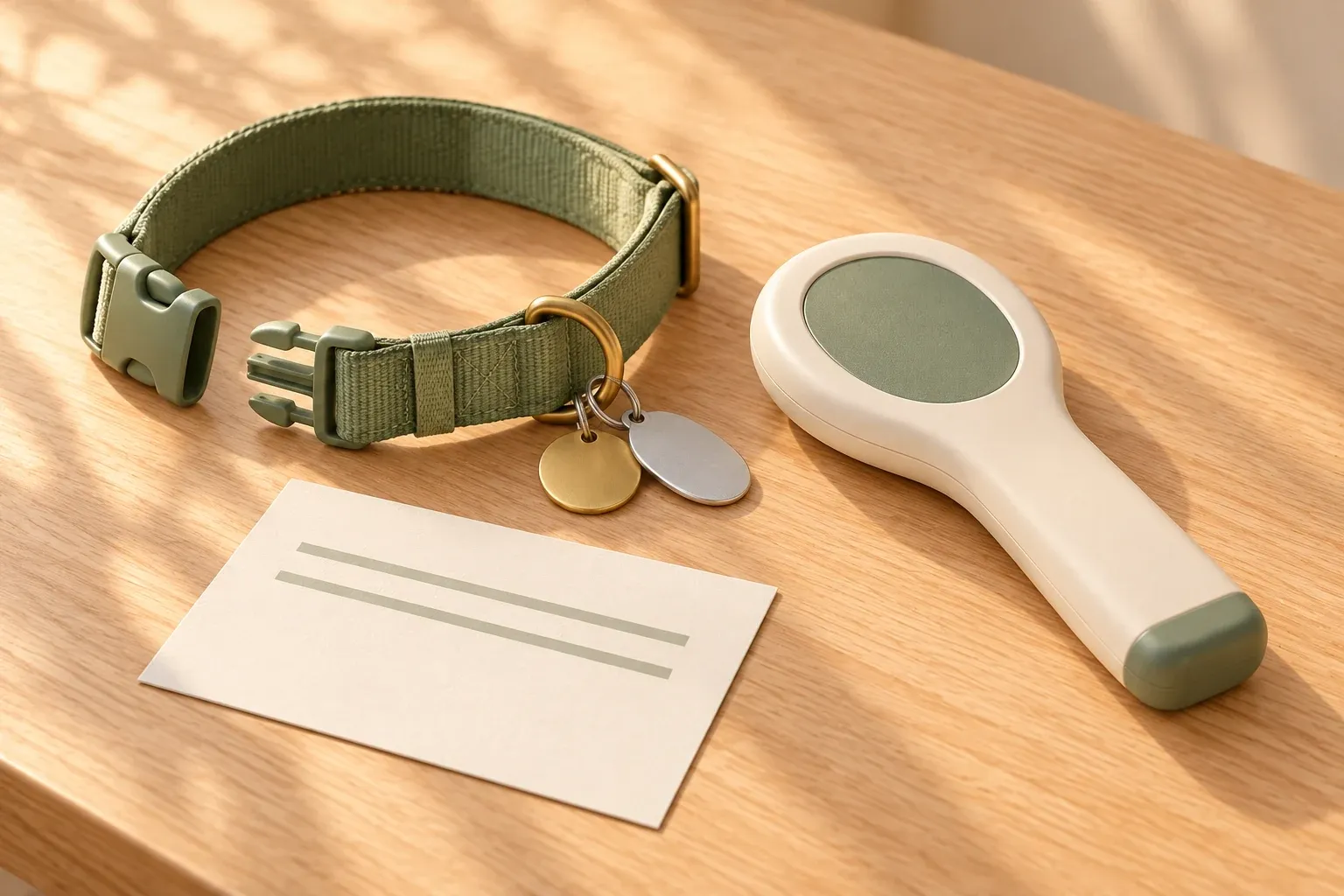
Each tag points to a different record keeper; the name or contact details on it tell you which. A clinic’s rabies tag carries its name or phone number, a serial number and often a year. A licence tag is issued by a municipality and carries the city or county name and a number. A registry tag carries a website or a toll-free number rather than a clinic.
Lost Pet Research and Recovery, a US recovery service, says: “For a rabies tag, call the vet listed and give them the number and year of the tag. For a dog license, call the Animal Control Officer or Town Clerk of the town listed on the tag and give them the number and year of the tag.” Be ready to leave your own number: the office may call the owner itself rather than hand you their details.
In Canada, rabies tags from clinics that use Boehringer Ingelheim’s vaccine are part of the getmeHOME system, which the manufacturer runs. Its FAQ explains that the tags are distributed only through vet clinics, that a finder can enter the seven- or eight-digit number on the site or call 1-866-637-4250, and that the owner chooses what information the finder sees. A tag with “getmeHOME” on it skips the clinic entirely.
| Tag | Who issued it | Who can match it to the owner | What to say when you call |
|---|---|---|---|
| Rabies tag with a clinic name | The vet clinic | The clinic, from its vaccination record | The tag number, the year, where you found the dog |
| Licence tag with a city name | The municipality | Animal services or the licensing office | The tag number and year; in Toronto, call 311 |
| Registry tag with a website or toll-free number | A tag registry such as getmeHOME | The registry, which shows a finder whatever the owner chose to share | The number on the tag |
| A number with no name at all | Unknown | Unknown; a scanner may find a chip instead | Take the dog to a clinic or shelter to be scanned |
Who do you call for a licence tag?
Call the city named on the tag; in Toronto, call 311. Toronto’s lost and found pets page asks you to report a found dog to 311 “whether you’re able to safely catch the dog or not”, to give the exact location and “if they are licensed with the City of Toronto, any tag information you can gather”. The operator then tells you whether to bring the dog to a shelter or how to reach the owner; the owner’s side of the same process is in our guide to a lost dog in Toronto. The City says its shelters reunite more than 2,000 lost animals with their guardians each year.
In the United States, many cities and counties contract their licensing to a company called PetData, whose online tag search takes a tag number, the issuing city and the tag year for the places it serves. If your town is not on its list, call the town clerk or animal control office.
What if there is no tag at all?
Get the dog scanned. A veterinary clinic or shelter can read a microchip in a minute, and Toronto’s page suggests exactly that for a dog you have been able to catch. If a chip is found, the clinic may be able to look up the registry itself; if it only gives you the number, the AAHA Universal Pet Microchip Lookup can help you find the registry, which can try to contact the owner.
The chip’s record may be out of date; the phone number on file may belong to a previous owner or no longer work. Our guide to checking and updating a pet’s microchip details explains what the record should contain; if the chip leads nowhere, call the registry anyway and ask whether it can mark the chip as found.
What should you do with the dog while you wait?
Report it, then keep it safe. Toronto asks finders to report to 311 first; Lost Pet Research says that “in many states, you are required by law to report the dog found” to the local animal control officer. Reporting helps animal control match the found dog with the owner’s missing-dog report.
Approach the dog carefully. Toronto’s page says not to run toward a loose dog, to approach slowly and let it come to you, and to check for tags “only if the dog is at ease”. Lost Pet Research puts it more bluntly: never call out to or chase a loose dog, because a frightened dog may run into traffic. Sit down, look away, and let it approach. A leash threaded through its own handle makes a slip lead if you have nothing else.
If you keep the dog at home for a day or two, tell the shelters that cover your area that you have it, put up a found-dog notice where you found it, and post it on the sites your area uses. Toronto’s page points owners to Helping Lost Pets.
How do you hand the dog back safely?
Ask the caller to describe the dog before you describe it to them. Ask for a marking, a habit or a scar that your flyer does not describe. Our guide to lost pet scam calls covers the pattern from the owner’s side, and the same checks work in reverse: ask for a photo of the person with the dog, or a vet receipt that names it, and meet in a public place in daylight.
Keep the dog on a lead until the handover is done, and rely on photos or vet records rather than the dog’s reaction: Lost Pet Research notes that a distressed dog may not show immediate recognition.
Where Dana fits
Dana keeps each pet’s microchip number, preferred vet and vaccine due dates in one health record that every caregiver in the household can see. A photo of the rabies certificate goes in Records Vault, part of Dana Pro, so whoever answers the clinic’s call has the details in front of them. If you are the owner, see what to do in the first hour after a dog goes missing and the pet health records guide.
Questions people ask
Can you look up a dog by its rabies tag number?
A clinic named on a tag may be able to match its serial number to the owner; call it with the number and the year on the tag, and expect it to contact the owner itself rather than give you their details. For a getmeHOME tag, use its website or toll-free number.
What if the tag has only a number and no clinic name?
A city or county name usually means a licence tag, so contact the municipality; a website or toll-free number suggests a registry tag such as getmeHOME in Canada. If there is nothing but digits, a vet or shelter can still scan the dog for a microchip.
Do I have to report a found dog?
In Toronto, the City asks you to report it to 311 even if you cannot catch the dog; the US recovery service we cite says many states require a report to animal control. Reporting it helps match the found dog with the owner's missing-dog report.
Should I keep the dog at home while I look for the owner?
Report it to animal control first and follow its advice. If you keep the dog, tell the nearby shelters and keep looking. An unreported dog is harder for its owner to find.