
How to check and update your pet's microchip details
Run the chip number through AAHA's free registry lookup, then check the record still names you, a phone that rings today and a second contact.

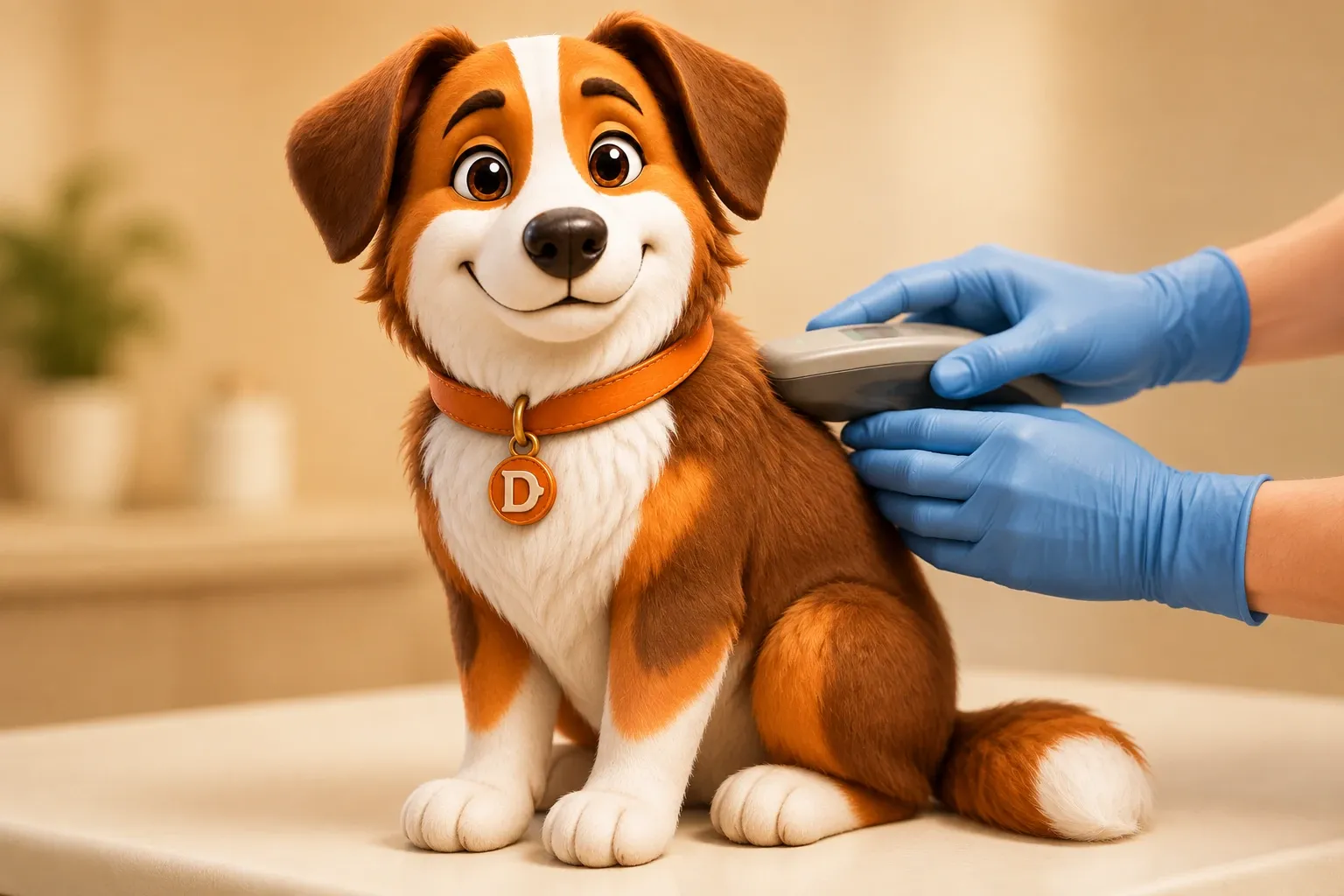
A stray dog comes into a clinic, and the first thing anyone does is run a scanner over her shoulders. The chip reads. Someone calls the number attached to it, and a recorded voice says the line is no longer in service.
If your pet is chipped, the chip is almost certainly fine. The part that goes stale is the registry entry behind it, and you can check it in about ten minutes: find your pet’s chip number, look up which company holds the registration, sign in, and confirm the record names you, a phone that rings today, and a second person who can be reached when you cannot.
What does a microchip actually store?
Almost nothing, which is the whole point of the confusion. AAHA says the only information on the chip is a 9-, 10- or 15-digit ID number, and that no medical or private information is saved on it. Everything a shelter needs to reach you sits in a separate database, maintained by a company, that the number points to.
Two beliefs follow from not knowing that, and both are common. The first is that a chip can locate a missing pet. It cannot; AAHA states plainly that microchips have no GPS capability and are identification devices, not trackers. What does find a missing dog is legwork and phone calls in the first hour.
The second is quieter and does more damage: that “she’s chipped” and “she’s registered” are the same sentence. They are two events. One happens at the clinic in a few seconds. The other happens when somebody sits down and fills in a form, and if nobody did, the number leads nowhere.
| The chip in your pet | The registry record | |
|---|---|---|
| What it holds | A single ID number | Your name, phone, email, address, alternate contact, vet |
| Who maintains it | Nobody. It is set at implant | You |
| Goes out of date | Never | Every move, every new phone number |
| Readable by | Any scanner at a clinic or shelter | Only the company that holds it |
How do you find out which registry has your pet?
Start with the number, then look it up. AAHA runs a free Microchip Registry Lookup Tool: you type in the chip number and it tells you which company’s registry the chip is enrolled with. That is the answer to a question most owners cannot answer off the top of their head, because there are dozens of registries and yours was chosen by whoever implanted the chip.
If you do not have the number written down, any clinic can scan your pet and read it out. AAHA notes that asking for a scan at the annual exam is worth doing anyway, since it also confirms the chip still reads and has not migrated, and that there is typically no charge for it.
One caveat about the lookup: it identifies the registry, not the owner. It will not tell you whose name is on the record. For that you have to sign in to the company itself, which is where most stale entries are finally discovered.
What should the record say, beyond your phone number?
More than one way to reach a person. AAHA’s guidance is to include an alternate contact, such as a trusted family member, along with your veterinarian’s name and contact details, and it makes the reasoning explicit: multiple contact routes are what get a found pet home quickly.
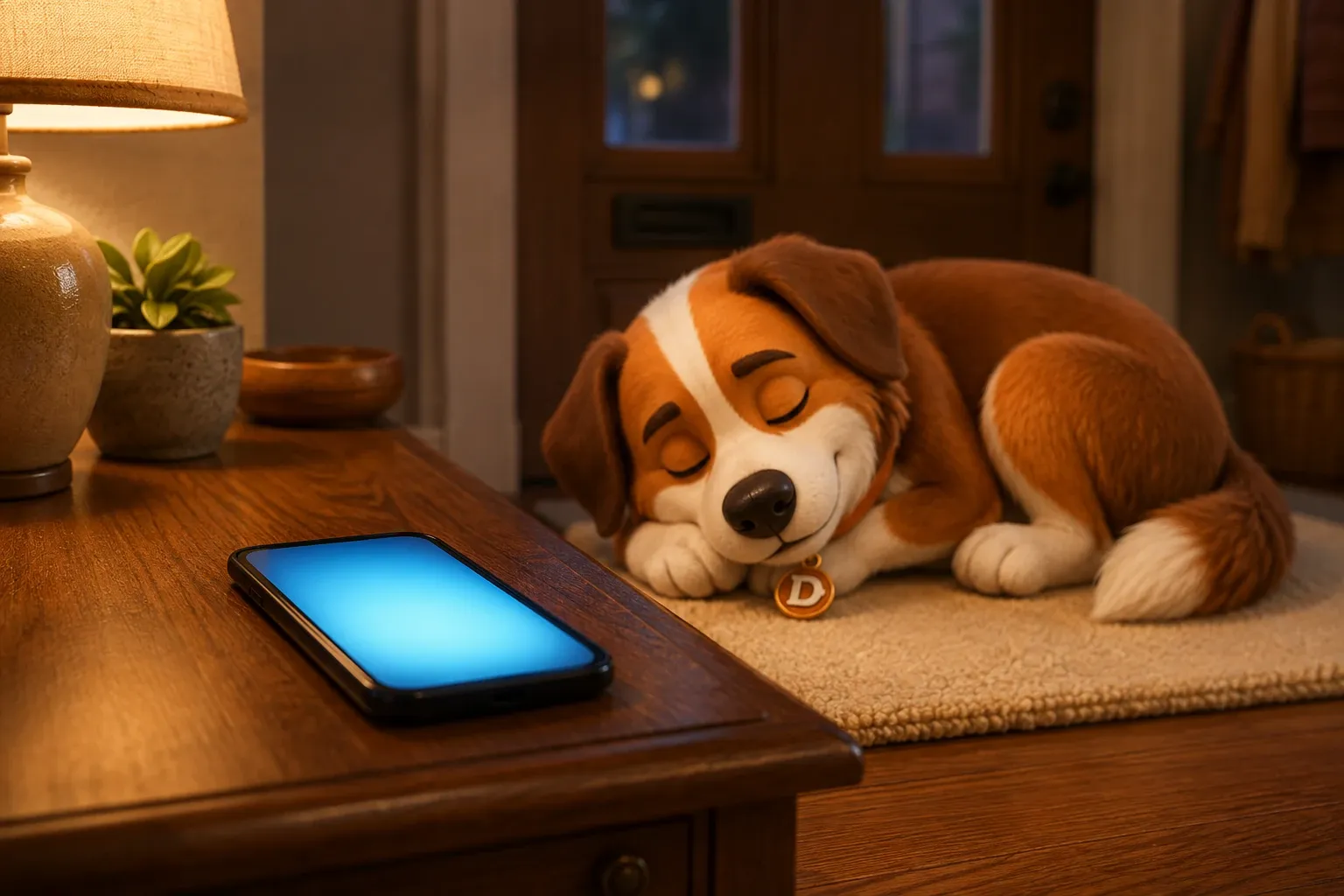
This is the part households get wrong, and it is a coordination problem wearing paperwork’s clothes. A record filled in by whoever happened to be at the clinic that day carries that person’s mobile number, and it stays that way for a decade. If the dog goes missing while they are on a flight, in surgery, or simply ignoring an unknown number, the record is technically current and practically useless.
So run a different test on it. If a shelter rang this record at three in the afternoon on a Tuesday, would a human being pick up? A second contact who lives locally is worth more than a second number that reaches the same person.
While you are in there, check the description too. Colour, markings, and any medical condition go on the same record, and a shelter reading “ginger tabby, notched left ear” has something to match against.
What if you adopted, and the chip is in someone else’s name?
Update it, and expect this to be normal rather than a problem. AAHA’s guidance for adopting a chipped pet is direct: update the contact information in the registry, and the adoption agency or previous owner should give you the microchip number and how to change the record.
Three situations account for most of these. A shelter or rescue chipped the animal and the record still names the organisation. A breeder registered the litter under their kennel. Or a pet changed hands privately and nobody thought about it, because the chip is invisible and nothing prompts you.
Reduced-cost chipping clinics deserve their own mention. AAHA points out that at shelter or nonprofit microchip events the owner often has to log in to the registry themselves to complete the registration, so the chip goes in and the record never gets made. If your pet was chipped at one of those, treat it as unregistered until you have seen the entry with your own name on it.
Each company sets its own transfer process, and there is no common standard across them, so start at the registry the lookup names and ask what they need. If the entry is locked to a previous owner, ask that company what evidence releases it. Creating a second record for the same chip number leaves two answers to one question.
When is it worth checking again?
At every event that changes how someone reaches you. That is a short list, and it is the same list every time: you move, you change your phone number or email, your pet changes households, or you are about to travel and leave them with someone else.
AAHA suggests two habits worth borrowing. Check before predictable chaos, which in practice means fireworks nights, thunderstorm season, and any week the front door will be propped open. And use a fixed annual date so it does not depend on remembering: they point at Check the Chip Day, 15 August, which exists for exactly this.
Add one more, because it is the one that actually catches errors: check it the same day you update anything else about your pet’s paperwork. If you are already changing the address on the vet file, the registry is the next tab. A finder who scans your pet reaches the registry before they reach you, which is why how a finder traces an owner from a tag or chip is worth reading from the other side.
Where Dana fits
Dana keeps the chip number, the registry name and your vet’s details on the pet’s shared record, so anyone you have invited with full access can read them out to a shelter without waiting for one specific person to answer their phone. Health records live alongside the vaccination dates and the vet’s details, in one place the whole household can open. When the call comes, the chip number and the registry name are in the same file as everything else about your pet, and any caregiver with full access can read them out.
Questions people ask
Does it cost anything to update microchip details?
Usually nothing. AAHA says most microchip companies let you update your information online at any time, and that while some charge a small fee for it, others offer it for free. The implant itself typically runs $25 to $50, which often includes the first registration.
Does my vet update the registry when I move?
No. AAHA points out that the registration lives with an individual microchip company, and that there is no single central database and no link to your veterinarian's own files. Your clinic can update its records and the registry will still hold your old number.
Can a microchip track where my pet is?
No. AAHA states plainly that microchips have no GPS capability. They are identification devices: a shelter or clinic scans the chip, reads a number, and looks that number up in a registry. Location tracking needs a GPS collar instead.
My pet already wears a collar tag. Is the chip still worth keeping current?
Yes, because the two work at different moments. AAHA describes the tag as the immediate contact anyone can read and the chip as the permanent identification that cannot fall off. The tag helps the neighbour; the chip helps the shelter.