
Lost cat: where to search in the first week
Search nearby: a study found 75% of recovered cats within 500 metres of their escape point; a third of missing cats were found alive within seven days.
 Kourosh Ebrahimzadeh6 min read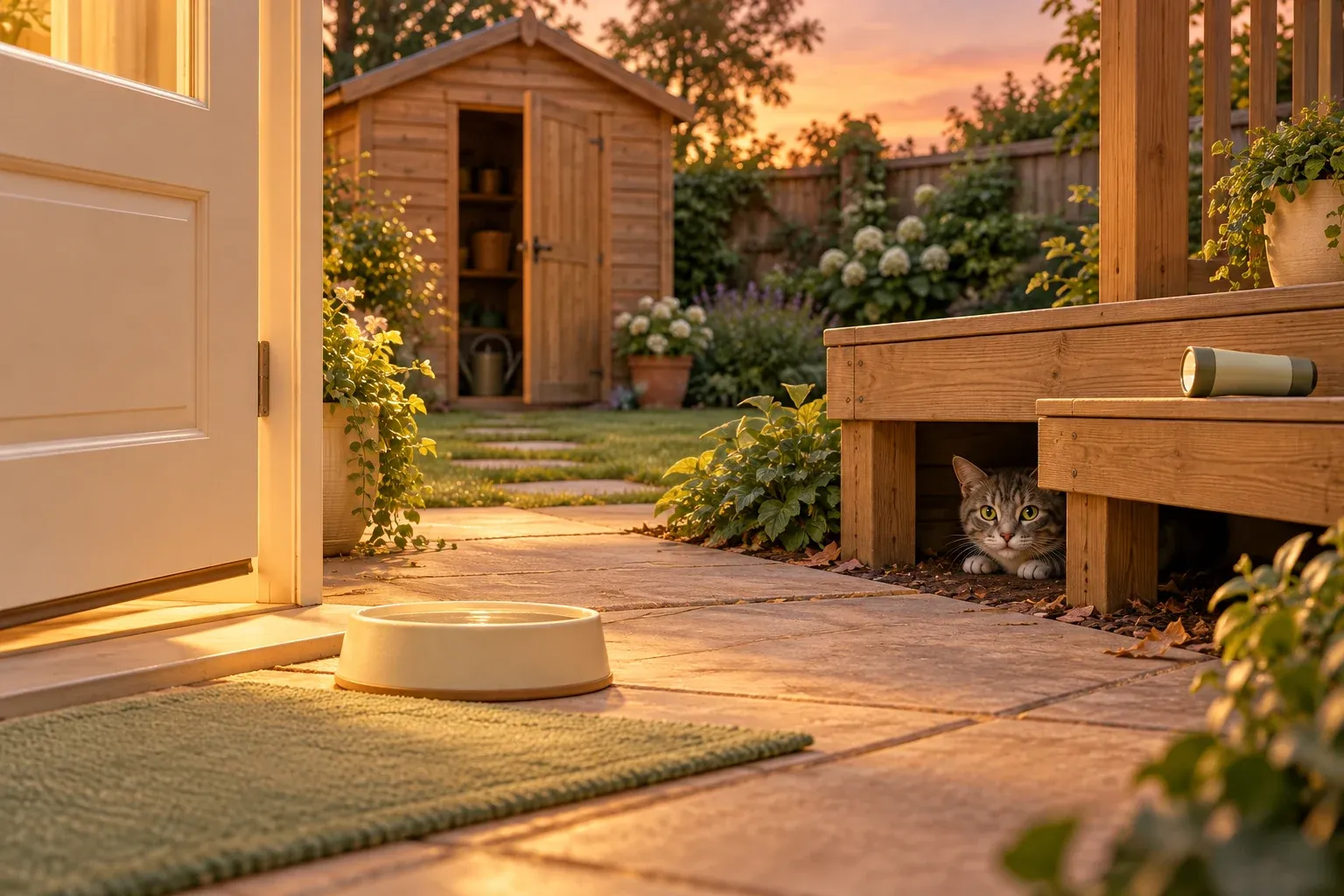
The door was open for a minute. Now it is 10 p.m., the cat has not come in for dinner, and someone says “she’ll turn up”. Some return on their own; a physical search is worth starting now.
Start searching on foot near home the same day. Through the first week, check slowly under and inside things within a few hundred metres of the door, including at dusk and dawn, while you tell the shelters, update the microchip record and ask the neighbours to check their sheds and garages. The evidence for searching comes from a 2018 study in the journal Animals by Huang and colleagues, which surveyed the owners of 1,210 missing cats: 75% of the recovered cats were within 500 metres of where they escaped, about a third of the missing cats were recovered alive by their owner within seven days, and physical searching was associated with finding the cat alive.
How far do lost cats really go?
Indoor cats were generally found nearest their escape point. The study, published in Animals in January 2018, is a retrospective survey of owners rather than a tracking experiment, so its figures describe where cats were found, not where every cat goes. In this survey: 75% of recovered cats were within 500 metres of the point of escape; indoor-only cats were found a median of 39 metres away, with three-quarters within 137 metres; and indoor-outdoor cats had a median of 300 metres, with a quarter found a mile or more from home. The cats that were found alive had been missing a median of six days.
The authors also found that cats described by their owners as highly curious were more likely to be found inside someone else’s house. Ask the neighbours to check garages, sheds and basements as well as searching outside.
| What the 2018 survey found | Figure |
|---|---|
| Cats found within one year | 61% (survey of 1,210 cats) |
| Recovered alive by the owner within 7 days | 34% |
| Recovered cats within 500 m of the escape point | 75% |
| Median distance, indoor-only cats (three-quarters within) | 39 m (137 m) |
| Median distance, indoor-outdoor cats (three-quarters within) | 300 m (1,609 m) |
| Median time missing, cats found alive | 6 days |
| Found alive after 90 days | Few |
Where should you search first?
Near your own door, at ground level, and after dark too. The study found most recovered cats near the escape point, so check the hiding places: under decks and porches, inside sheds and garages, under parked cars, behind garden furniture, in window wells, in the crawl space.
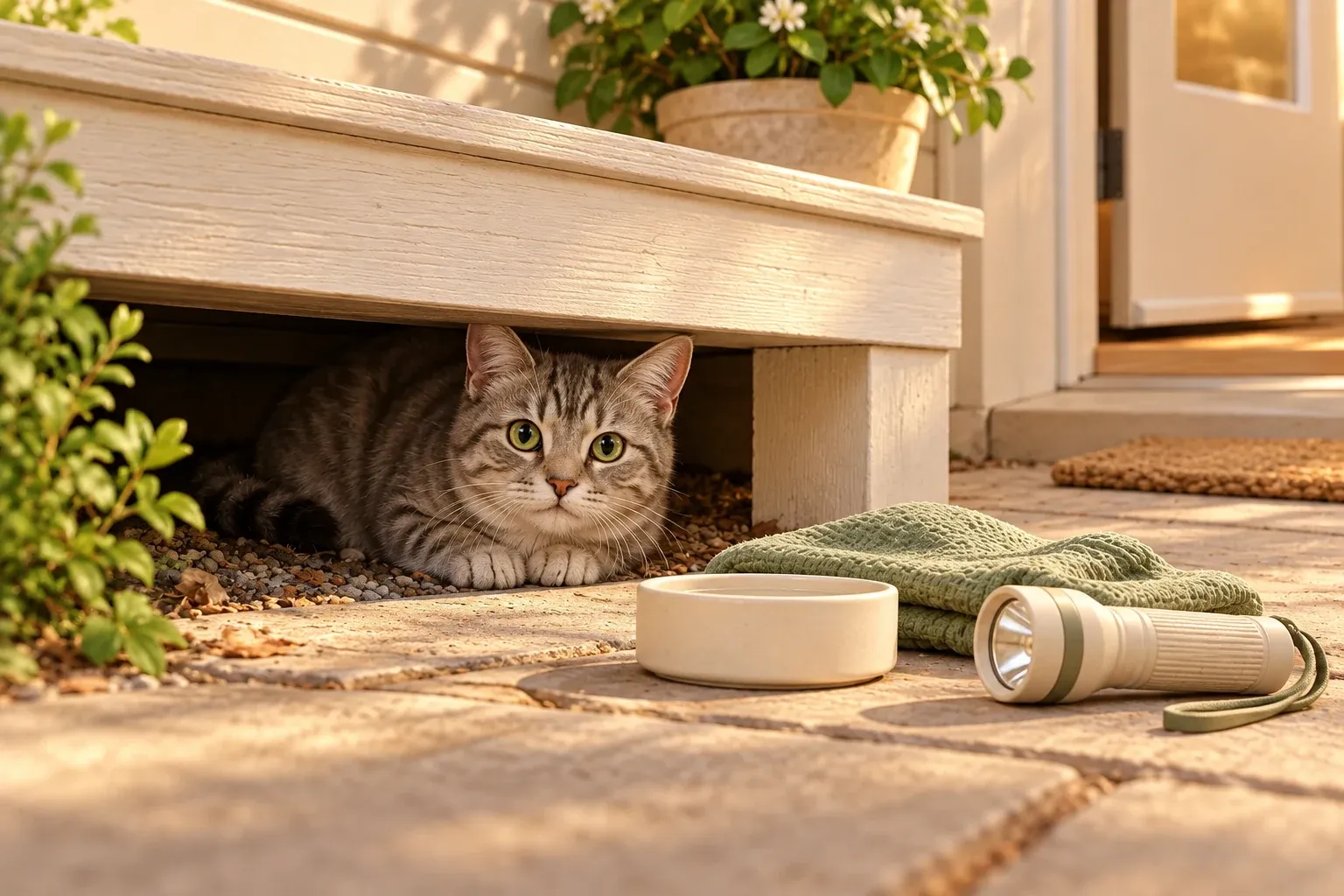
Search slowly on foot with a flashlight, at dusk and before dawn when the street is quiet. Shine the light into every gap at ground level, because a hiding cat’s eyes reflect before the rest of it is visible. Call softly or shake the treat bag, then stop and listen for a minute; a cat that will not come out may still answer.
In the survey, indoor-only cats were generally found nearest their escape point. In the first 48 hours, keep checking your own property and the four or five properties around it, especially when it is quiet.
What do you ask the neighbours?
Permission to look, and a specific request: open the shed and the garage. A cat shut in by accident cannot come home, and it may stay silent when a stranger opens the door. Ask whoever lives either side and behind you to check any outbuilding they have not opened since the cat went missing, and to leave garage doors open for ten minutes at dusk if they are willing.
Give them a photo and your number, and tell them the cat may be hiding nearby; people look differently for a cat they expect to find crouched under a car than for one they expect to see trotting past.
Who do you call, and what do you tell them?
The shelters and animal control that cover your address, your own vet, and the microchip registry. Call the shelters on day one and again every two or three days: the study’s introduction cites shelter reclaim rates of 2 to 4% for cats against 26 to 40% for dogs, so keep checking for your cat yourself. In Toronto, the City asks owners to file a lost-animal report with Animal Services at 416-338-7297 or through 311 and to check its stray-animals list, and our guide to a lost dog in Toronto lists the three shelters; the same offices handle cats.
Then the microchip. Call the registry, confirm the phone number on file rings today, and flag the chip as lost. Our guide to checking and updating a microchip record walks through the lookup. A finder can use the chip number to contact the registry, which calls the number you left there.
Posters are worth the hour. Among owners who handed out fliers or mounted posters, 52% to 55% found their cats alive, the highest shares among the advertising methods the study compared, and the recovery rates were similar for plain letter-size posters and large neon ones. Put them at the corners of your block and at the vet clinics and shops within the 500-metre circle, with a photo, the date, and the word “indoor cat” if it is one, so that people look under things rather than for a cat on the move.
What should you leave outside?
Leave familiar smells by the usual door. Put a worn piece of your clothing and the cat’s bedding by the door you usually let it in through, and a bowl of its normal food. Check at each dusk and dawn search whether the food has gone, and if it has, sit quietly nearby at the next one. We found no study of whether a used litter tray outside the door helps, so do not rely on it.
If your cat is being fed elsewhere, see when someone else is feeding your cat.
When do you widen the search?
Search farther for an outdoor cat from the start; after a first week with no sighting, widen further from the same point. Keep the dusk and dawn checks going at home, because the study found cats alive well after the first week and few after 90 days, but widen the posters to the next ring of streets, post the cat on the lost-pet sites your area uses, and ask the shelters whether any cat matching the description has come in from farther away.
In week two, keep searching on foot and put posters farther out. The study concludes that “thorough physical searching is a useful strategy, and should be conducted within the first week after cats go missing”.
Where Dana fits
Check the phone number in the microchip record, the name on the licence and whether anyone has a current photo. Dana keeps the chip number and the vet’s details in the cat’s health record, visible to every caregiver. Records Vault, part of Dana Pro, holds the licence and documents. The person at home can give the shelter the chip number while someone else searches. For dogs, see what to do in the first hour after a dog goes missing; for records, the pet health records guide.
Questions people ask
How far does a lost cat usually go?
In the 2018 study of 1,210 missing cats, three-quarters of those recovered were within 500 metres of where they escaped. Indoor-only cats were found a median of 39 metres away, three-quarters of them within 137 metres; indoor-outdoor cats had a median of 300 metres, and a quarter were found a mile or more away.
How long can a cat be missing and still come home?
In the study, 61% were found within a year and a third were recovered alive by their owner within seven days; few were found alive after 90 days. Start a physical search the same day and keep it going through the first week.
Should I put food and the litter tray outside?
Food and the cat's own bedding outside the door you usually use are reasonable: they give a hiding cat a familiar scent and a reason to approach. We found no study showing that a litter tray helps, so do not rely on it.
What if the microchip registry has my old number?
Update it now, from the registry's website or phone line, and then call the clinics and shelters near you with the chip number. A finder can use the chip number to contact the registry, which calls the number on file.