
Sharing a pet's medication schedule without double-dosing
The two-caregiver dose problem and its fix: one shared log both people trust, where a dose isn't done until it's recorded with who and when.

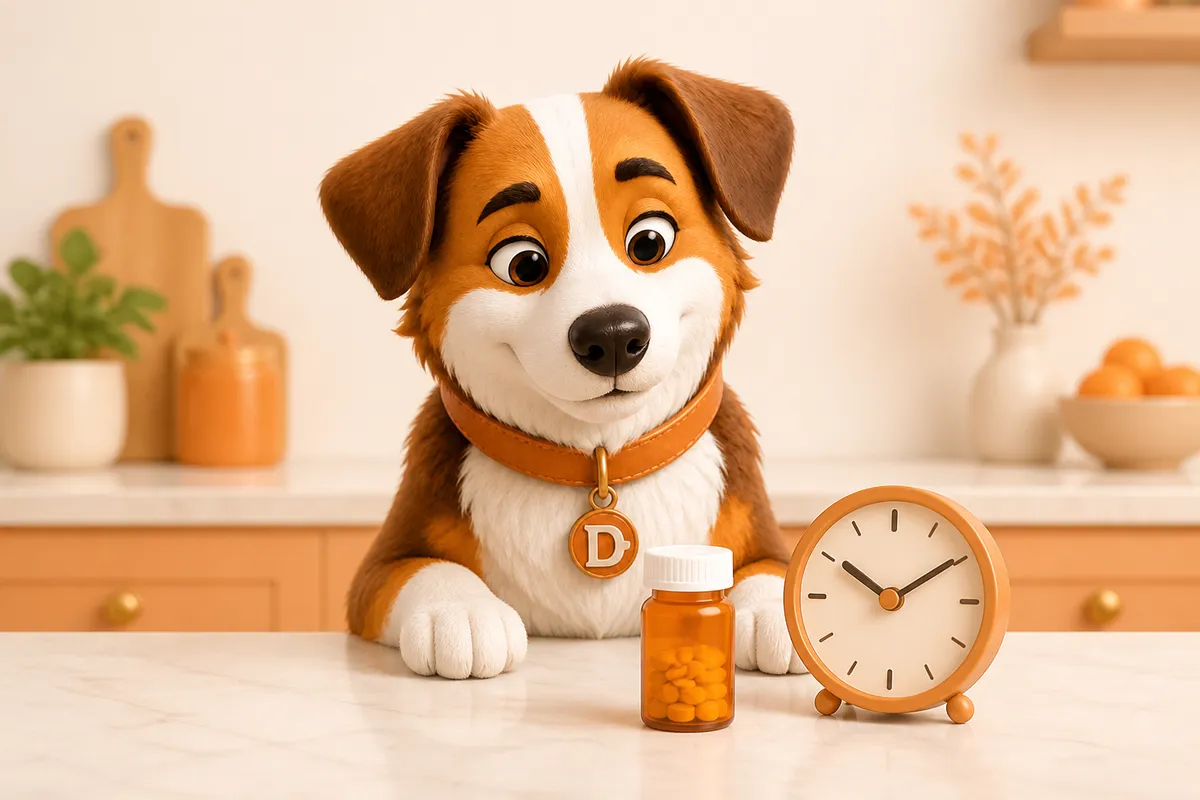
A dose schedule shared between two people has a failure mode a solo caregiver never meets: the double dose. Each of you assumes the other hasn’t done it yet, each errs on the side of caring, and the cat gets her thyroid pill twice. The mirror image, each assuming the other has, skips the dose entirely.
The fix is a rule, not a gadget: a dose is not given until it’s logged, and both caregivers act on the log, not on assumption. Everything else in this article is making that rule cheap enough to actually follow.
Why medication is the sharp edge of shared care
A doubled breakfast is a funny story. Medication is where the same coordination bug stops being funny: insulin, seizure medication, heart drugs, and anything with a taper all have real consequences for a doubled or skipped dose, and “I think she got it?” is exactly the answer a poison-control call can’t work with.
Memory also fails here in a specific way: giving a pill is so routine that your memory of today’s pill is indistinguishable from yesterday’s. Confidence isn’t evidence. A record is.
The rule, in practice
Make the log part of the physical act: tap “given” while the pill is in your hand, in the same rhythm as opening the bottle. A log you fill in later is a log you’ll fill in wrong.
Make it answer the question of record: who, what, when, as in “amoxicillin ✓ Sam, 8:02 AM.” Time matters (“can I give the next one yet?”), and the name matters more than people expect: it’s what lets either of you look instead of ask.
Make the reminder shared and self-quieting: it fires until someone logs the dose, then stands down for everyone. Two independent phone alarms are how double-dosing happens on schedule. Which free plans share a reminder across people, and which stop at one phone, is the subject of free medication reminder apps. If a reminder you set never arrives, pet care reminders not working checks the task first and then the phone.
And decide the fallback once, calmly, with your vet: “if we’re ever unsure whether she got it, we do X.” For most maintenance drugs the answer is “skip and resume”, but that is your vet’s call to make once, not yours to improvise at 9 PM.
Courses, tapers, and the end-date trap
For a finite course such as antibiotics or a steroid taper, record the end date when it starts. Two reasons: tapers change dose on schedule and deserve a written plan rather than a remembered one; and reminders that keep firing after a course ends teach the whole household to swipe reminders away, which is how the important ones start getting swiped too. When the course ends, end it in the system the same day. Where the medicine comes from is a separate question, and the prescription is yours to take elsewhere more often than owners realise.
What this looks like when it works
Nobody negotiates doses in the hallway. Whoever’s nearest at 8 AM checks the log, sees pending, doses, taps. The other person sees it done and thinks about something else. The vet asks “has she been getting it consistently?” and you hand over a dose history instead of a guess. The system’s success is measured in conversations that never happen.
Where Dana fits
Dana’s medication tracking is built around the rule: shared dose reminders that quiet for the whole care team when one person logs, every dose signed with who and when, and dose history that’s there when your vet asks. It sits inside the wider record system covered in pet health records, organized for real life.
Questions people ask
What do we do if we cannot tell whether a dose was given?
Follow the rule you agreed with your vet in advance rather than deciding in the moment. For many maintenance drugs the answer is to skip and resume, but that depends on the drug, which is why it is a question to ask once and write down.
Does the log need the exact time, or is the day enough?
The time, because the next question is almost always whether the next dose is due yet. A date alone cannot answer that, and it cannot tell your vet how the doses were actually spaced.
How do we handle a dose given by a sitter or a family member?
Have them log it themselves under their own name. A dose recorded second-hand loses the time it was actually given, and the whole point of the name on the entry is that nobody has to reconstruct who did what.
What about medication that is only given as needed?
Log it the same way, because as-needed drugs are the ones where the pattern matters most. A record of how often it was actually reached for is one of the more useful things you can hand a vet at the next visit.