
New puppy schedule: who does what in the first weeks at home
A first-weeks puppy schedule built around potty breaks, meals, and sleep, then split across the household so no one carries the 2 AM shift alone.

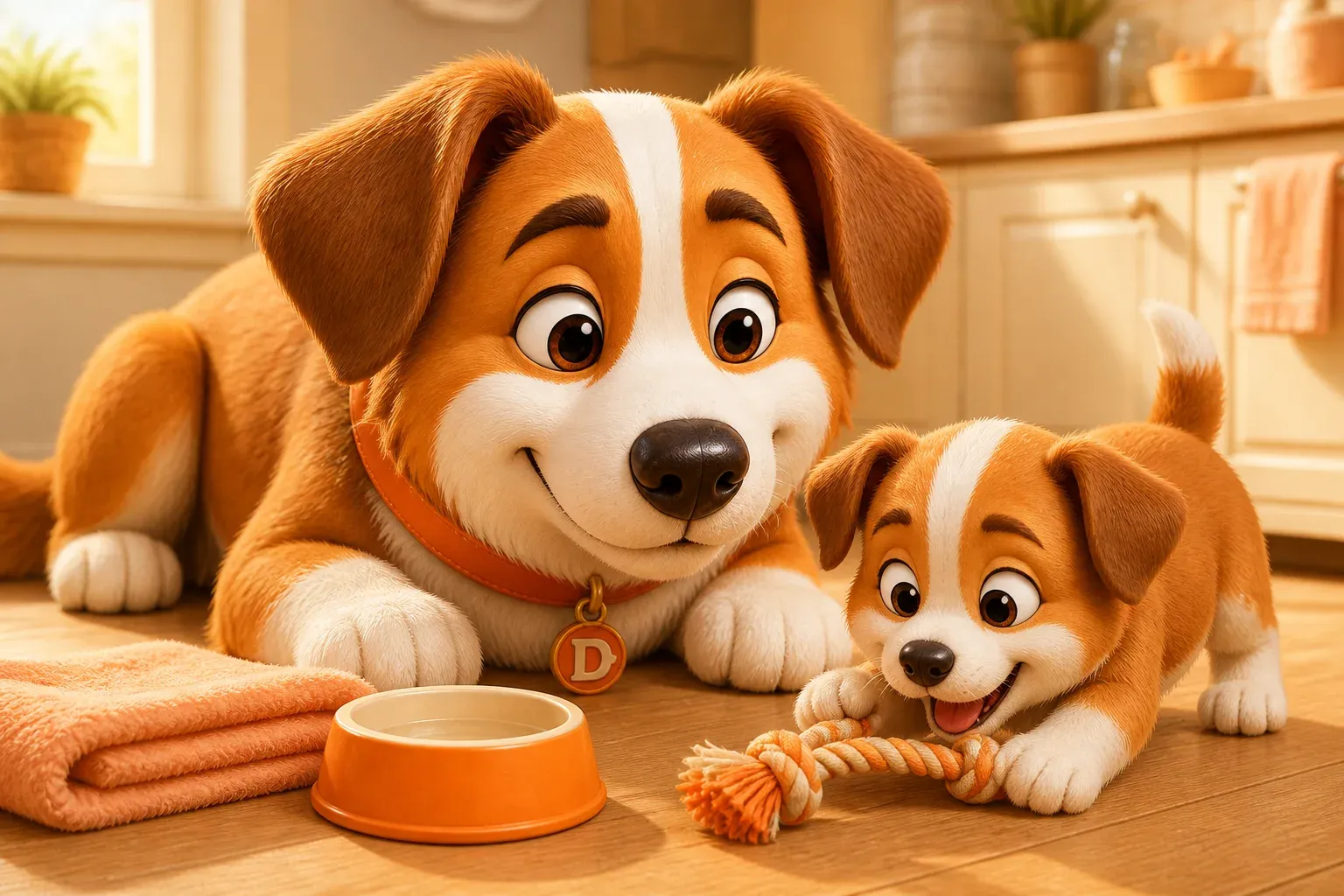
The puppy came home on Saturday. By Tuesday nobody in the house has slept through the night, two people took him out at the same time by accident, and somebody fed him lunch twice because the bowl was empty and he looked hungry.
A puppy schedule that survives the first weeks is built around the puppy’s body, not the family’s calendar, and then split into shifts so that no single person becomes the puppy’s only caregiver. Start with potty breaks, because they set everything else; layer meals and sleep onto them; then assign each block to a named person and log what happens, so the household runs on a record instead of on memory.
How often does a puppy need to go out?
A young puppy needs a potty break roughly once an hour for every month of age, and at least every two hours while awake. Humane World for Animals puts it plainly in its house training guide: a three-month-old may need to go every three hours, and every puppy needs to go out after waking, after eating or drinking, and after play.
That rule is the skeleton of the whole schedule. An eight-week-old puppy on a two-hour cycle means the day has about eight potty trips in it, and the night has at least one. Write those trips down as fixed times before you decide anything else, because meals and naps have to fit around them, not the other way round.
The same guide says house training typically takes four to six months. Most of that time is not the puppy learning; it is the household being consistent long enough for the puppy to notice.
What does a first-week day look like?
A first-week day is a repeating loop: out, eat, out, play, nap, out. The times below assume an eight-week-old puppy and a household where someone is home; shift them to fit your day, but keep the gaps.
| Time | Block | Who |
|---|---|---|
| 6:30 | Out, then breakfast, then out again | Morning person |
| 8:30 | Out, short play, nap in the crate | Morning person |
| 10:30 | Out, training game, nap | Whoever is home |
| 12:30 | Out, lunch, out again | Whoever is home |
| 14:30 | Out, play, nap | Whoever is home |
| 16:30 | Out, walk in the yard, nap | Afternoon person |
| 18:30 | Out, dinner, out again | Evening person |
| 20:30 | Out, calm play, last water | Evening person |
| 22:30 | Last trip out, crate | Evening person |
| 2:30 | Night trip out, straight back to the crate | Rotating |
The “Who” column is the part most families skip. Fill it in with names, not roles, and rotate the night trip so it lands on each adult in turn. The person who does every 2:30 trip for three weeks is the person who stops enjoying the puppy.

Meal amounts come from the vet or the food label; that is not a household decision. Meal timing is, and fixed times are what make the potty breaks predictable.
How do you split the puppy across the household?
Split by time block, not by task. “You do feeding, I do walks” collapses the first time one of you is late home. “You have 6:30 to noon, I have noon to bedtime” survives, because the person on shift does whatever the block needs.
Two rules keep the shifts from leaking into each other. First, the handoff is a sentence: “He went at 11:50 and ate at 12:30.” Second, that sentence gets written down, because by 15:00 nobody remembers whether the 12:30 meal happened, and a puppy who looks hungry always looks hungry. The double-feeding problem is not a mystery; it is what happens when a meal is not logged.
Kids can take real blocks too, with an adult nearby. Filling the water bowl, the 16:30 yard trip, and the calm-play window are all jobs a school-age child can own. Our piece on pet chores for kids by age covers which jobs fit which ages.
What goes wrong in week two?
Week two goes wrong when the novelty wears off and the schedule quietly reverts to whoever cares most. The signs are specific: the log shows one name on every entry, the 2:30 trip stops being rotated, and accidents inside go up because someone assumed someone else had taken him out.
The fix is the log itself. When each potty trip and each meal is written down with a name and a time, the drift is visible in a week rather than a month, and the conversation is “you had four of the last five nights” instead of a vague sense that things are unfair. The same dynamic plays out with adult dogs, which is why we wrote about uneven pet care load separately.
Expect the schedule to loosen as the puppy grows. At four months the two-hour cycle becomes three or four, the night trip disappears, and the blocks get longer. Rewrite the table then rather than letting it rot.
What should you write down from day one?
From day one, write down four things: every potty trip and whether it succeeded, every meal, every dose of anything the vet prescribes, and the dates the vet gives you for the next visit and the next vaccine. The vaccine schedule itself is the clinic’s to set; your job is to record the dates and not lose them.
Keep all of it in one place the whole household can see. A whiteboard works until someone is at work; a shared app works from anywhere. What matters is that the incoming person can read today’s state without texting the outgoing one.
Where Dana fits
Dana is built for exactly this loop. Set the potty breaks and meals as repeating tasks, assign each to a caregiver, and every completion is logged with who and when, so the noon handoff is a glance at the timeline. When one person takes the puppy out, the reminder quiets for everyone else, which ends the two-people-at-the-door problem. Vaccine due dates live on the puppy’s health record with reminders weeks ahead. Roles and invites are in our guide to sharing pet care. If your household would rather post puppy photos to a shared feed than keep a log, DogLog is built for that, and our comparison says so plainly.
Questions people ask
How often does a new puppy need to go outside?
Roughly once an hour for every month of age, and at least every two hours while awake, plus straight after waking, eating, drinking, and playing.
How many times a day should a puppy eat?
Your vet or the food label sets the amount. What the household controls is the timing: fixed meal times make potty breaks predictable.
How long until a puppy is house trained?
Typically four to six months, according to Humane World for Animals. Consistency across everyone in the house is what shortens it.