
A pet sitter daily report you can reuse
Use a short pet sitter daily report for each animal: visit times, completed care, observations and what the next person still needs to do.
 Kourosh Ebrahimzadeh5 min read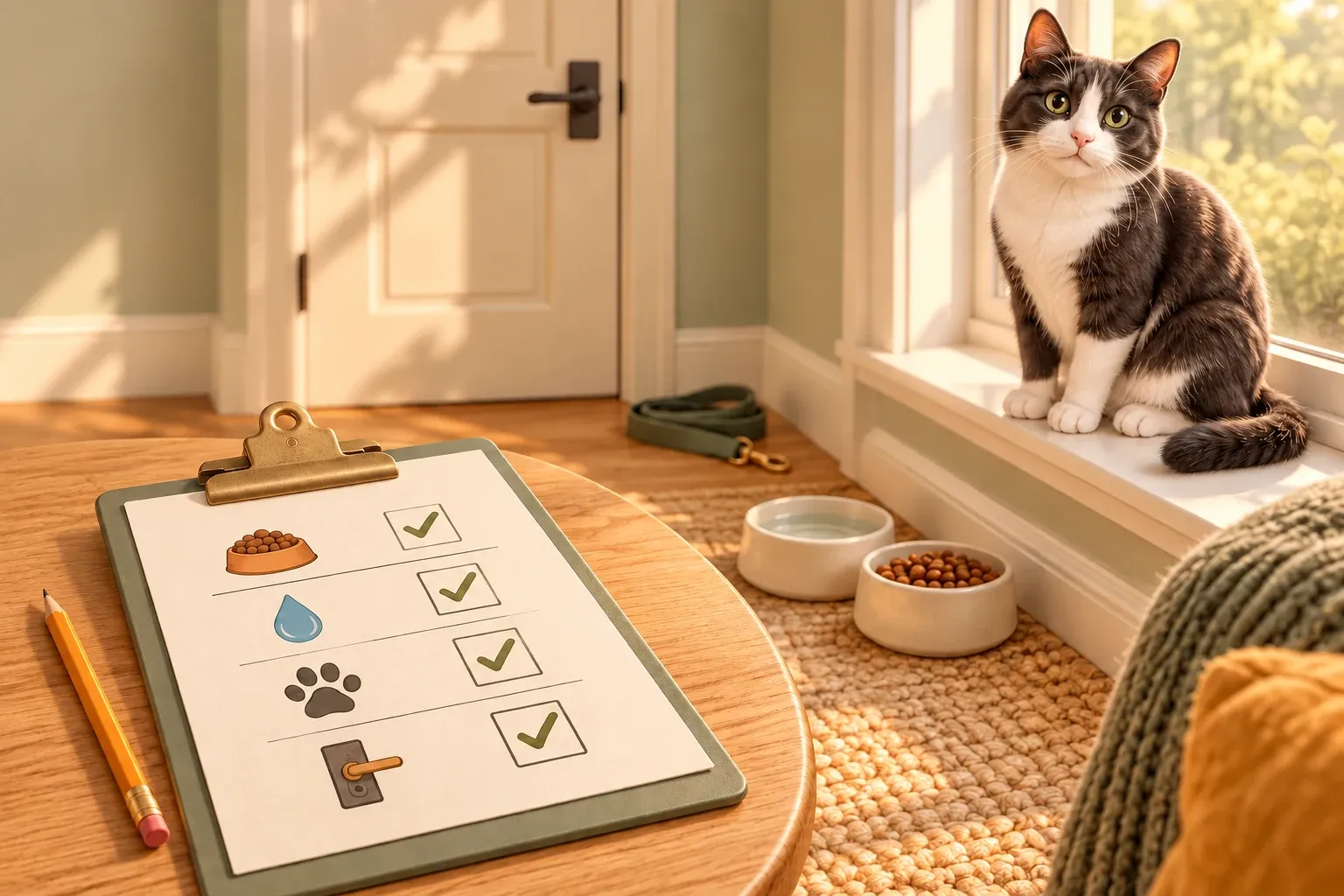
A photo tells you how your pet looked during a visit. It can still leave you wondering whether dinner happened, what the sitter observed and what the next caregiver needs to do. A short daily report should answer those questions without another round of messages.
A useful pet sitter daily report names each pet, records the visit times and separates completed care from observations and pending tasks. Keep it short enough to write after every visit. Use the same fields each time so the owner can spot a change.
What does the report need to answer?
It needs to tell the next person what happened and what remains to be done. Pre-trip instructions set out the plan; the daily report says what happened.
Before the first visit, agree on food, access, contacts and the care plan using a pet sitter handoff. At the end of each visit, report against that plan. This is easier than trying to reconstruct an evening from several chat messages.
Rover’s guide to Rover Cards gives a concrete example of visit reporting: cards for walks, drop-ins and daycare can include photos, a message and food, water or toileting activity. The service type determines the available fields. You can use a similar written structure without using that platform.
Agree on where reports will live, too. A message sent to one family member can leave another without the information they need. Our shared pet care guide covers that household problem. When comparing pet care apps, check what a helper can view and log under the role you intend to give them.
Which fields are worth keeping every time?
Keep the fields that help someone act correctly after the sitter leaves. Optional details can follow them, rather than burying the completion status in a cheerful paragraph.
| Field | What the sitter records | Why the next person needs it |
|---|---|---|
| Pet and caregiver | Which animal and who made the entry | Who recorded the care |
| Visit window | Arrival and departure times | Which period the report covers |
| Completed care | Tasks carried out under the agreed plan | Whether another person should repeat a task |
| Observation | What the sitter directly saw | Context for a question or change |
| Pending action | What remains, who will handle it | A clear next step |
| Contact made | Who was contacted and their reply | Continuity after a concern |
Keep “offered,” “ate” and “left” distinct. A full bowl placed on the floor establishes that food was offered; it doesn’t establish how much the animal ate. Describe what you could observe, and say when you couldn’t observe it.
For a new product, use the name on the package rather than “the usual treats.” Our pet food label guide shows which details identify a product. The feeding instructions should already be agreed with the owner.
What can you copy into a daily report?
Copy this blank household template and fill it in at the visit.
Pet: [name]
Caregiver: [name]
Visit: [arrival] to [departure]
Completed: [agreed tasks carried out, with times where needed]
Observed: [what you saw; note anything you couldn’t check]
Still to do: [task, person responsible and agreed time]
Contact: [person contacted and their instruction, or none needed]
Photo: [optional attachment]
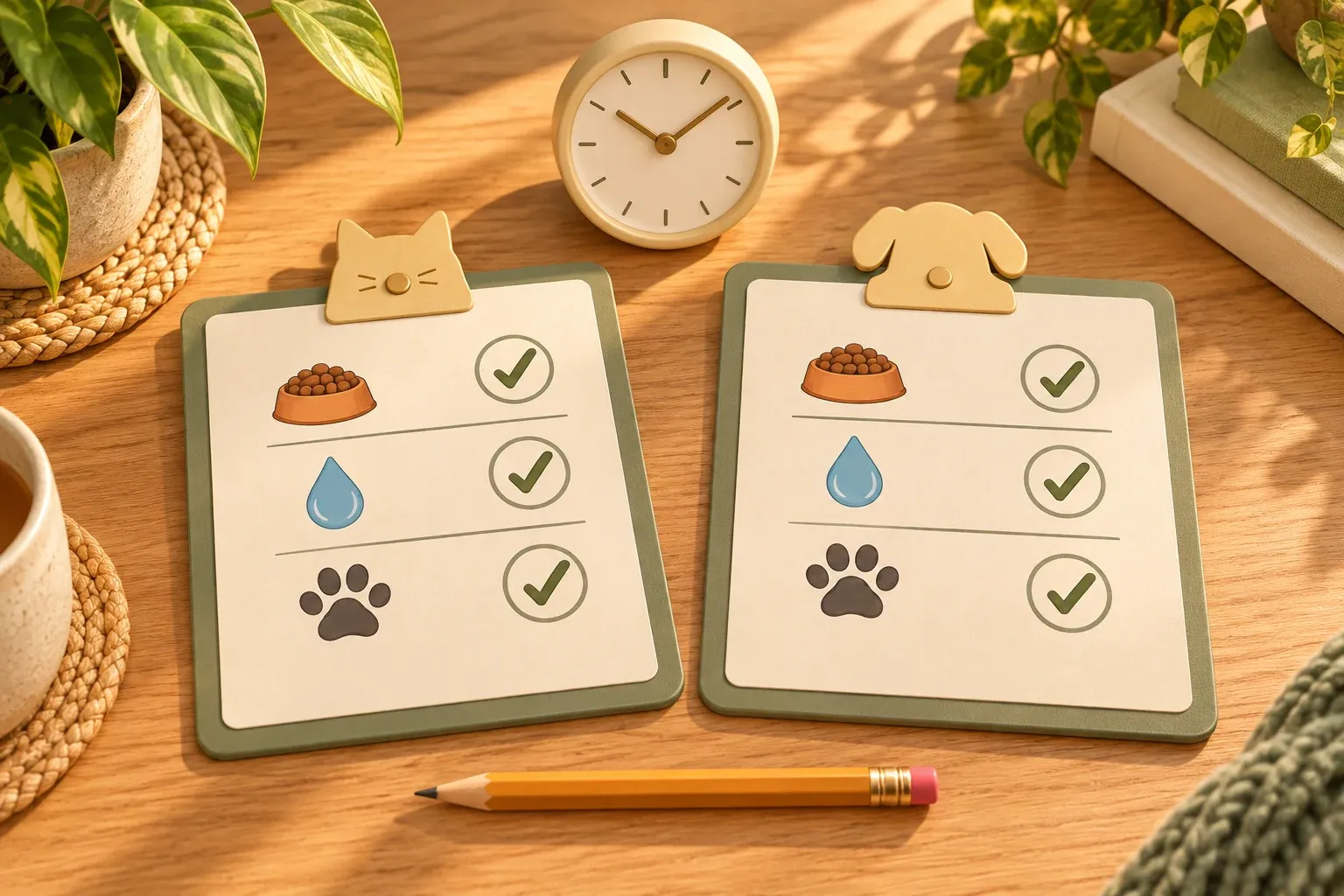
Write one entry per animal when the visit covers several pets. You can reuse the visit window, but keep food, tasks and observations under each name. When feeding multiple pets, separate entries make clear which bowl or routine each update refers to. If the owner is travelling, name the visit’s local time zone so an update is clear on both sides.
How much detail is enough?
Enough detail lets the owner answer a practical question without a follow-up message. More words do not help if they still leave the action unclear.
Record a completed task directly. If a task wasn’t completed, say so and explain the obstacle. “Could not refill the usual food container; contacted owner” is more useful than a vague reassurance that dinner was sorted.
Describe where the cat was seen or what remained in the bowl, rather than guessing why it happened. If medication care is part of an agreed arrangement, follow the written instructions and record who handled each scheduled action. Ask the owner or clinic to clarify uncertainty before acting.
Rover’s card instructions tell sitters to start a service when it begins and review the card after stopping it. Do the same with your report: fill it in while the visit is fresh, check it, then send it.
What happens when the plan changes?
Contact the agreed person when a change needs their decision, then record the instruction and the handoff. A routine report should not delay the contact or substitute for it.
A task handoff stays unconfirmed until someone accepts it. Naming a person in a message is not confirmation that they have seen it. For time-sensitive care, use the contact method you agreed before the trip.
If the owner asks the sitter to accompany pets to an appointment, confirm which animals are booked and who can speak with the clinic. The multiple-pet vet visit checklist separates those patient and transport details. Add the clinic’s written follow-up to the handoff afterward so the next visit follows the revised plan.
Where Dana fits
Dana’s shared care records who completed logged care and when, with a separate profile for each dog or cat. Use those entries to check the completed-care part of your report, then add your observations and pending questions in the update you send the owner. Choose the helper’s role before the first visit: a limited caregiver sees assigned or open tasks, while broader timeline access belongs to the caregiver role.
Questions people ask
What should a pet sitter daily report include?
Name the pet and caregiver, record the visit times, say what care was completed and describe relevant observations. Finish with anything pending and the person who needs to act. A photo can accompany the report.
Should a sitter write one report for several pets?
One message can cover the visit, but each pet needs its own named entry. A shared statement such as 'everyone ate' can hide which animal was offered which food and what was left.
Is a photo enough for a daily update?
A photo can show a moment at the visit. Add written confirmation of the care completed and anything the next caregiver needs to know, since those facts may not be visible in the picture.
Should an urgent concern wait for the report?
No. Follow the agreed contact and veterinary plan when a concern needs immediate attention. The daily report records what happened after you have made the needed contact.